STEM & Discovery
Wind-Powered Paper Movers: An Air and Motion Investigation
 Facebook
 Pinterest
 X
X LinkedIn
 Reddit
 WhatsApp
 Telegram
 Bluesky
 Email
Email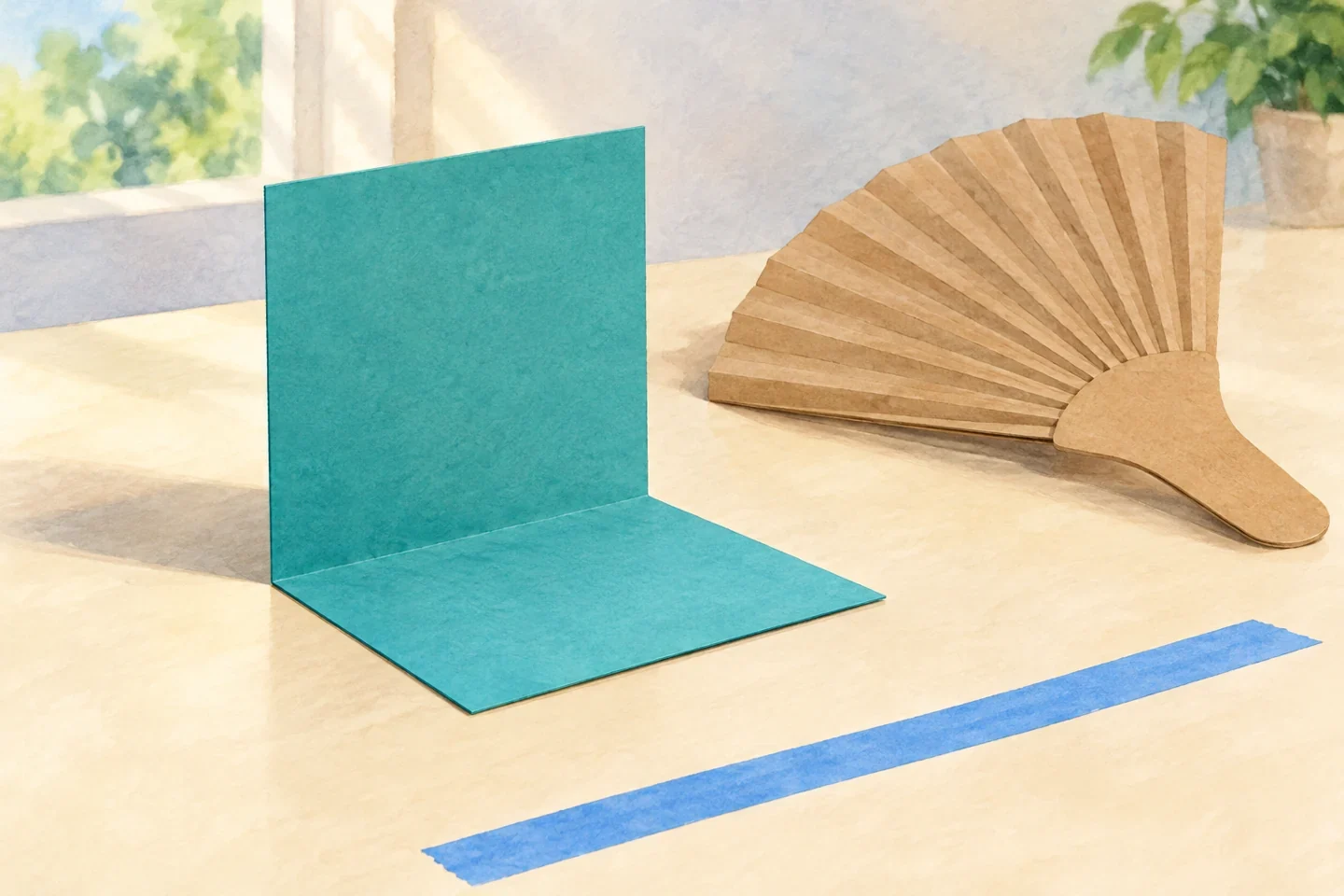
Moving air can push a light paper shape across a table. This investigation uses folded cardstock with an upright face and a flat foot, so there are no wheels, motors, or small fasteners. Children compare two sail sizes and watch how a change affects movement. The aim is controlled observation, not blowing as hard as possible or racing other children.
At a glance
| Suggested ages | 5–9 |
|---|---|
| Activity time | 20–35 minutes |
| Adult setup | 5–10 minutes |
| Participation | Individual or small group; watching, pointing, and partner assistance are welcome |
What you need
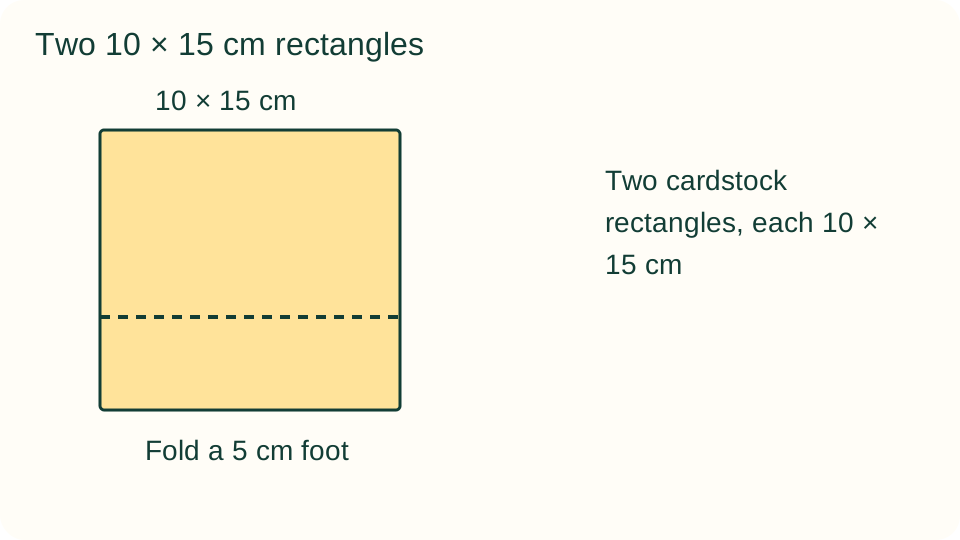
- Two cardstock rectangles, each 10 × 15 cm
- One smooth cardboard hand fan, approximately 20 × 15 cm
- Pencil, ruler, removable tape, and a smooth clear tabletop
Get ready
Check the fan for sharp or ragged edges. Mark a starting line well away from the table edge. Hand fanning avoids shared mouth-blowing equipment. Keep the mover's path clear, and stop the activity if the table becomes a busy walking or eating space.
Try the activity
1. Fold the first mover
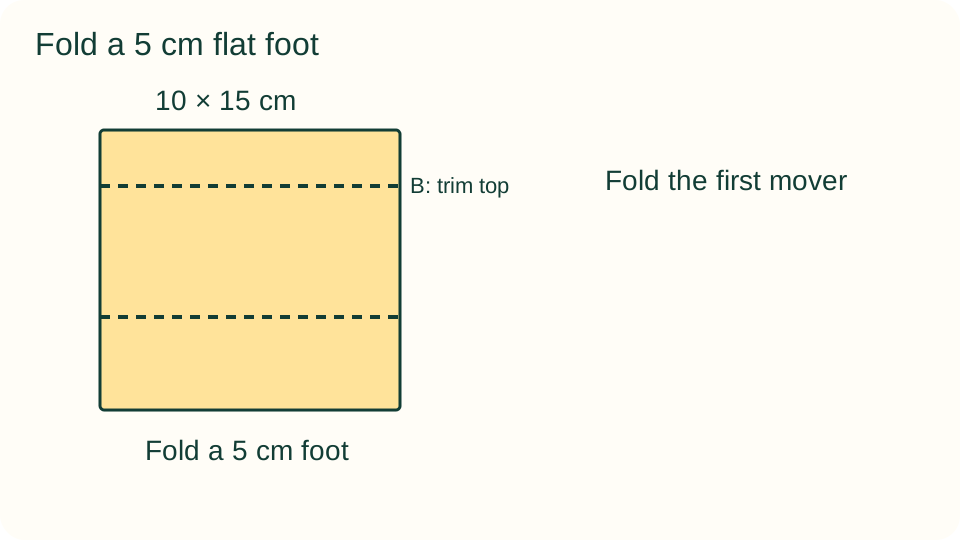
Place a rectangle with its 15 cm side running away from you. Measure 5 cm from one short end and fold across the width. Stand the remaining 10 cm upright while the 5 cm foot lies flat. Crease firmly so the two parts form an L.
2. Make the comparison mover
Fold the second rectangle in the same way. An adult helps trim 3 cm from the top of its upright face, leaving the foot unchanged. Label the large face A and the smaller face B. Keep removed cardstock for another project rather than adding it underneath.
3. Check the sliding surface
Place both movers on the table and move each gently by hand. Remove wrinkles or tape from the area that touches the table. A rough or sticky surface can prevent either design moving, making the sail comparison difficult to interpret.
4. Set a fan position
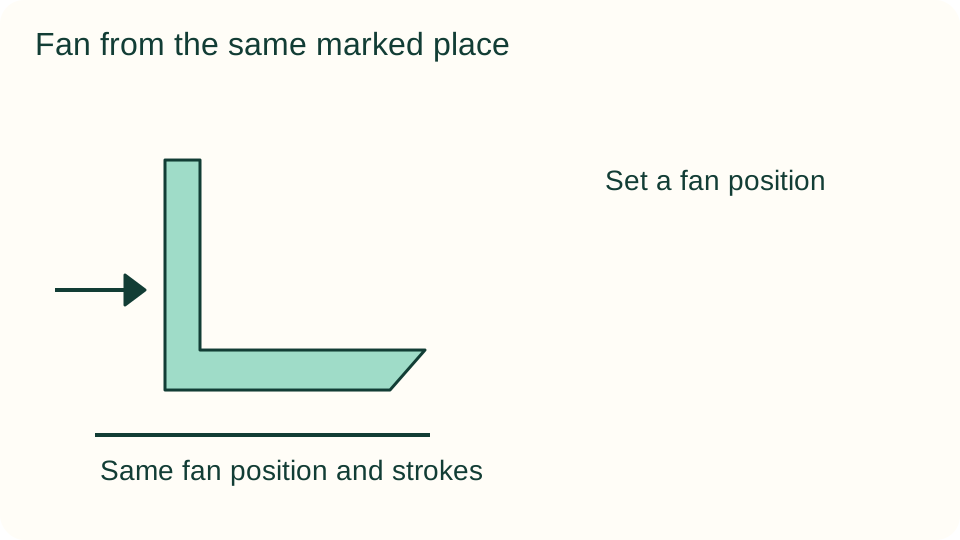
Place A at the start with its upright face toward the fan and its foot extending away. Mark a fan position about 20 cm behind it. Use three gentle forward fan strokes from that spot. Practice once to find strokes that move rather than flatten the sail.
5. Run repeated trials
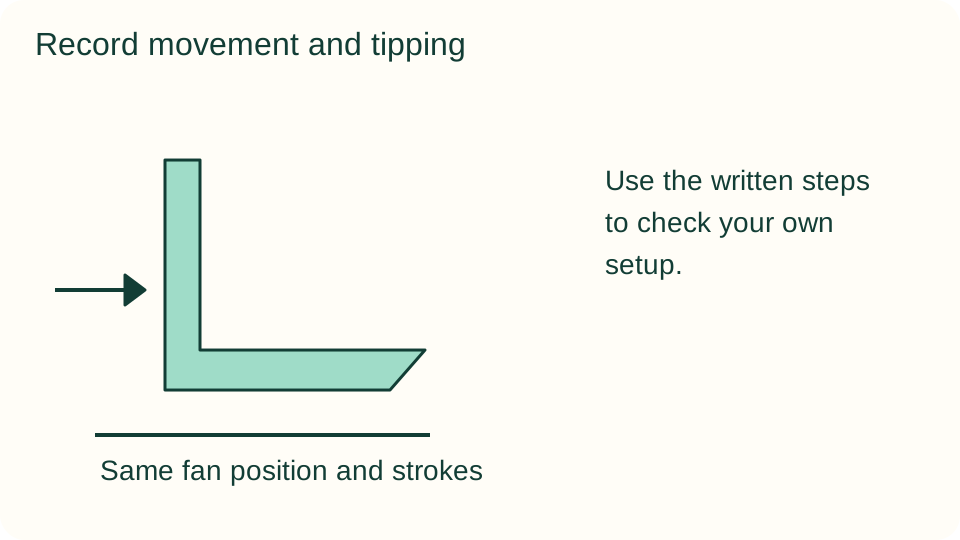
Reset A at the line for each of three trials, recording its resting position or distance. Repeat for B with the same fan position and stroke count. Use the same fan operator where possible. Retrieve a mover before it approaches the table edge.
6. Choose a next question
Compare the recorded distances and any tipping. Decide whether to test a wider foot or another sail height next. Change only that feature and keep the surface and fanning method consistent. Describe a trial that did not move instead of leaving it out.
What children can explore
Air pushes against the upright paper while contact with the table resists sliding. Sail size, paper stiffness, foot shape, and fan movement can all affect the result. A larger sail does not guarantee a farther journey because it may bend or tip. Ask what the child noticed before reaching a conclusion.
Make it work for your group
For beginners, use adult-folded movers and compare near and far landing positions. Older children can measure from the starting line and graph repeated distances. Offer an observation role or a partner-operated fan if repeated arm movements are uncomfortable.
At home and in the classroom
At home, work on a cleared section of table with an adult watching the edge. In a classroom, create separate making and testing stations. Rotate folder, fan operator, and recorder, but keep one operator for a complete A-versus-B set before exchanging roles.
Save your discoveries
Copy a simple record onto paper: what you changed, what stayed the same, and what happened. Drawings, pointing to a sketch, or notes dictated to an adult work as well as independent writing. Record the actual observations, including trials that did not go as expected.
Helpful fixes and cleanup
A sail that collapses may need thicker card or a sharper crease. A mover that will not slide may need a smoother surface, not stronger fanning. Remove starting tape, save the cardboard fan, and flatten the movers for storage with a sketch of the test setup.