Hanukkah
Dreidel Counting Games for Beginners
 Facebook
 Pinterest
 X
X LinkedIn
 Reddit
 WhatsApp
 Telegram
 Bluesky
 Email
Email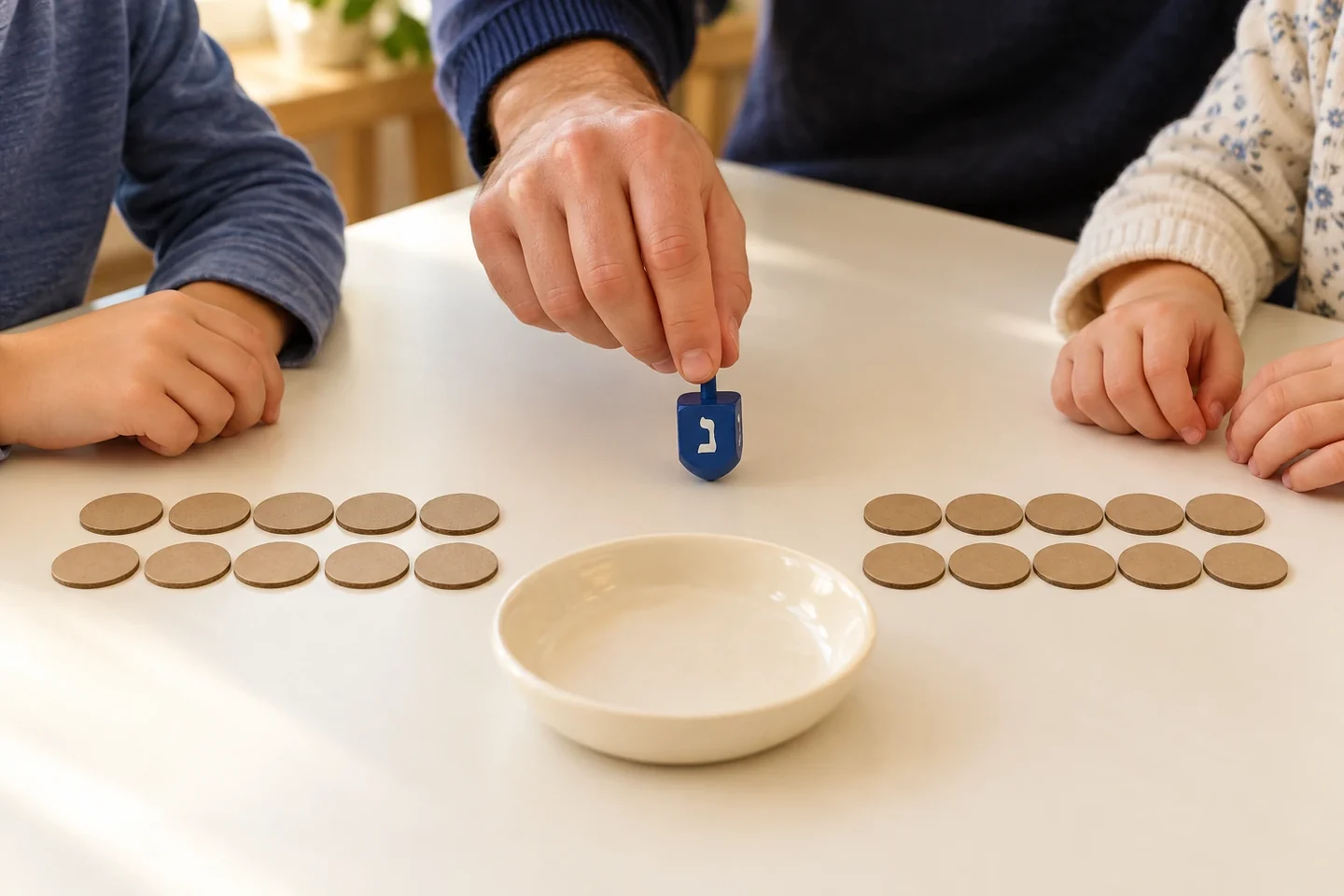
Your activity at a glance
| Suggested ages | 5–10 |
|---|---|
| Activity time | 15–25 minutes |
What you need
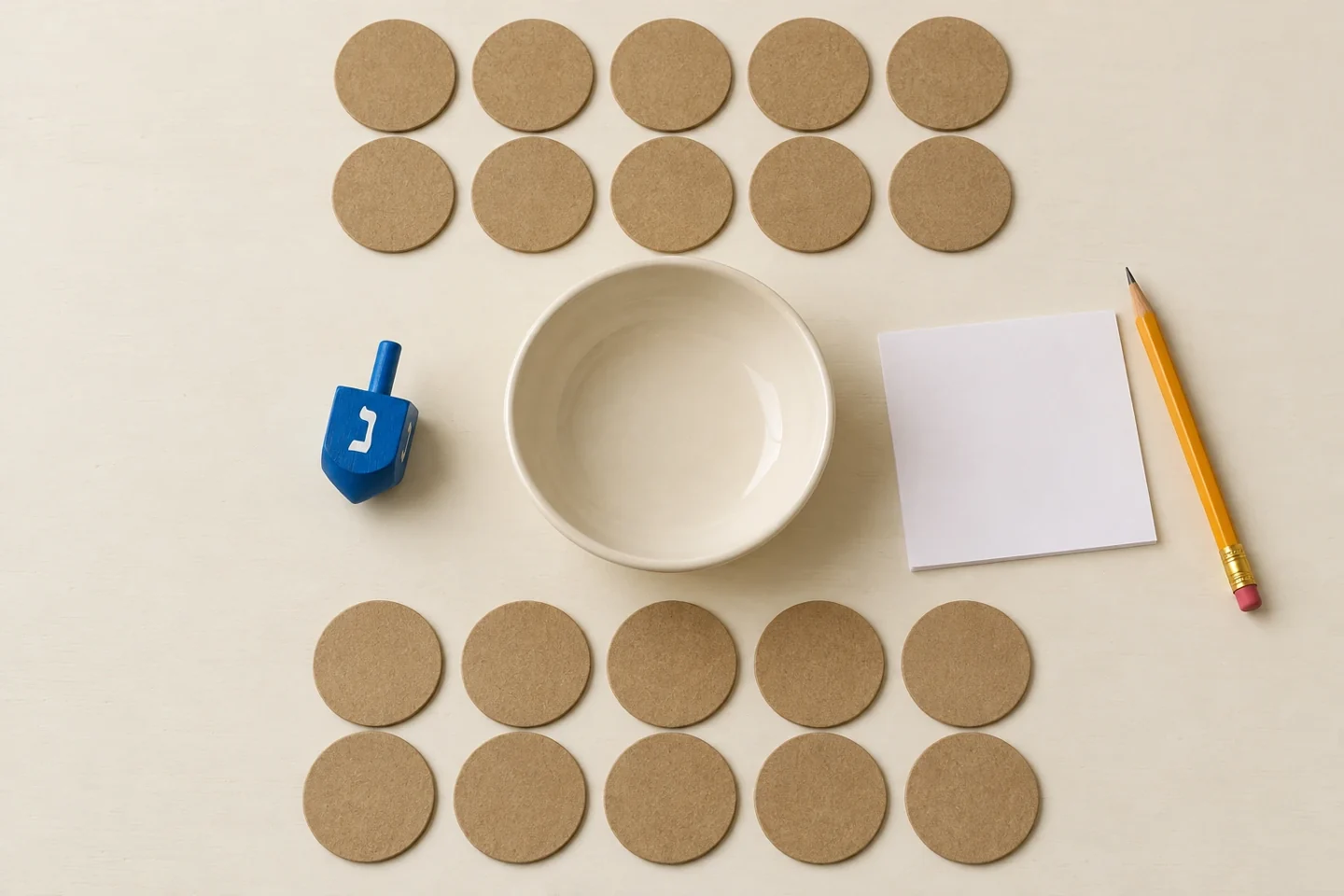
- 1 correctly lettered four-sided dreidel
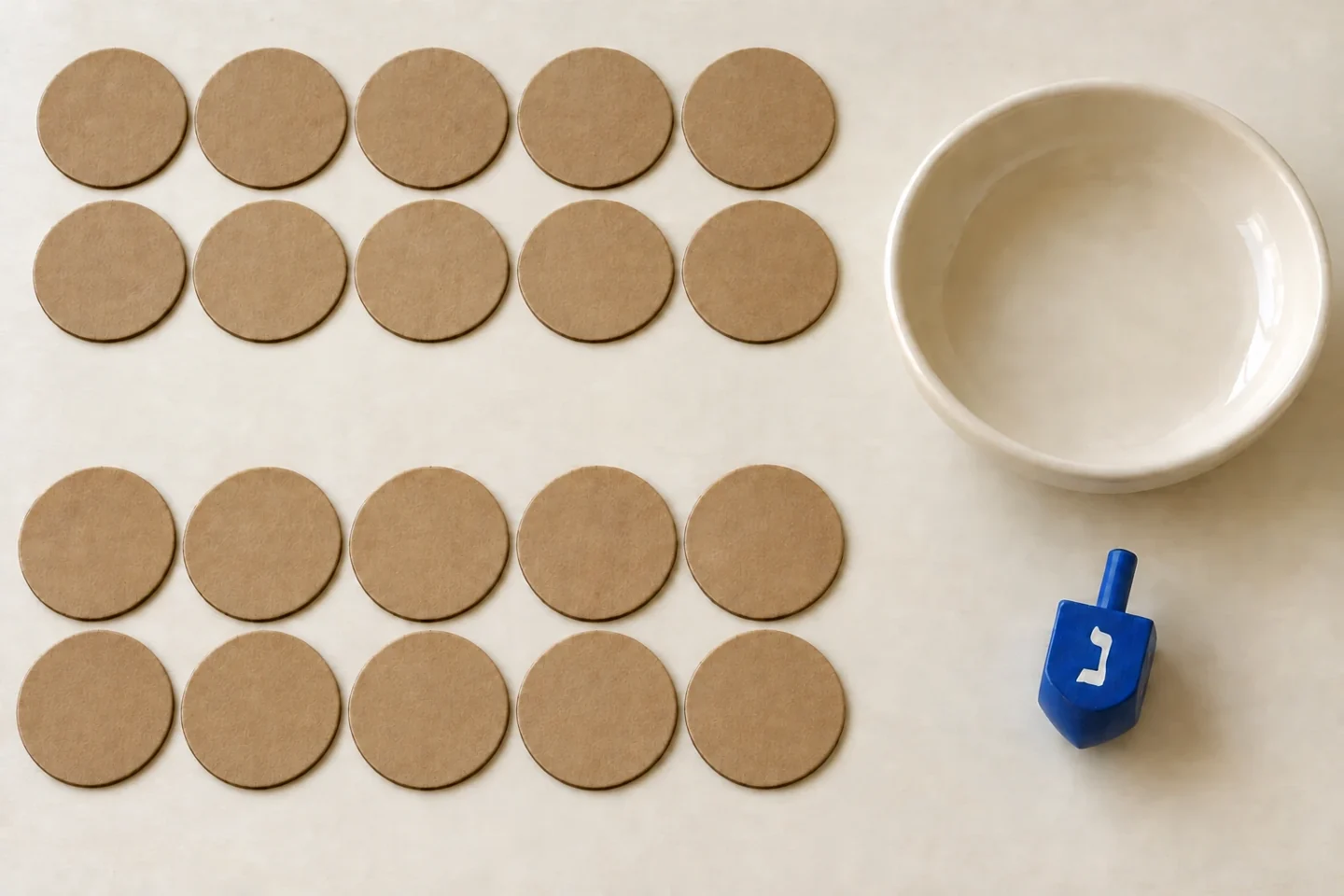
- 10 large cardboard counters per player, 2–4 players
- 1 shallow bowl or marked central space for the pot
- Paper and pencil for a rule reminder
- A flat, uncluttered playing surface
Spin, count and move the counters
Dreidel is a traditional Hanukkah game that combines spinning, taking turns, and moving counters into or out of a shared pot. This beginner guide uses large cardboard counters rather than money or food. Children can see what happens after each spin and count the changes together. We follow one stated rules variant, including leaving an odd counter in the pot when taking half, so adults do not need to improvise midway through a turn.
Before you begin
Use the actual lettered dreidel your group will play with, and agree on its four actions before distributing counters. This sample has two players with ten large counters each. A shallow bowl marks the pot clearly. For the first few turns, an adult can read the reminder while the child moves and counts the counters.
Let’s make it, step by step
1. Check the dreidel
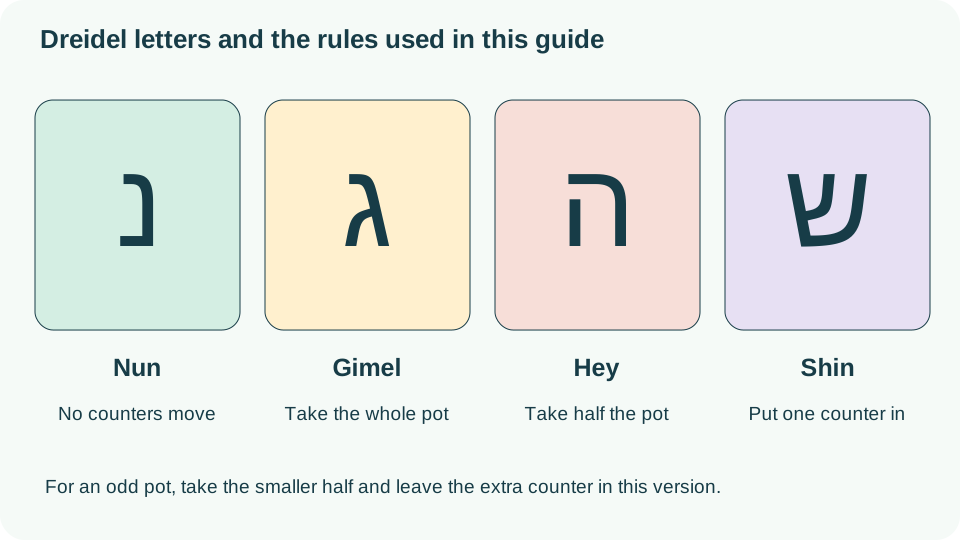
Use a real four-sided dreidel with the letters nun, gimel, hey, and shin for this version. Some dreidels used in Israel replace shin with peh. Check which version you have before teaching the game, and use a matching reference rather than guessing from the shapes.
2. Set out equal starting piles
Give each player ten large counters. Count the piles together to confirm they begin equally. Put a shallow bowl in the middle and have everyone contribute one counter. Explain that the bowl is the shared pot, separate from each player’s own pile.
3. Explain the four outcomes
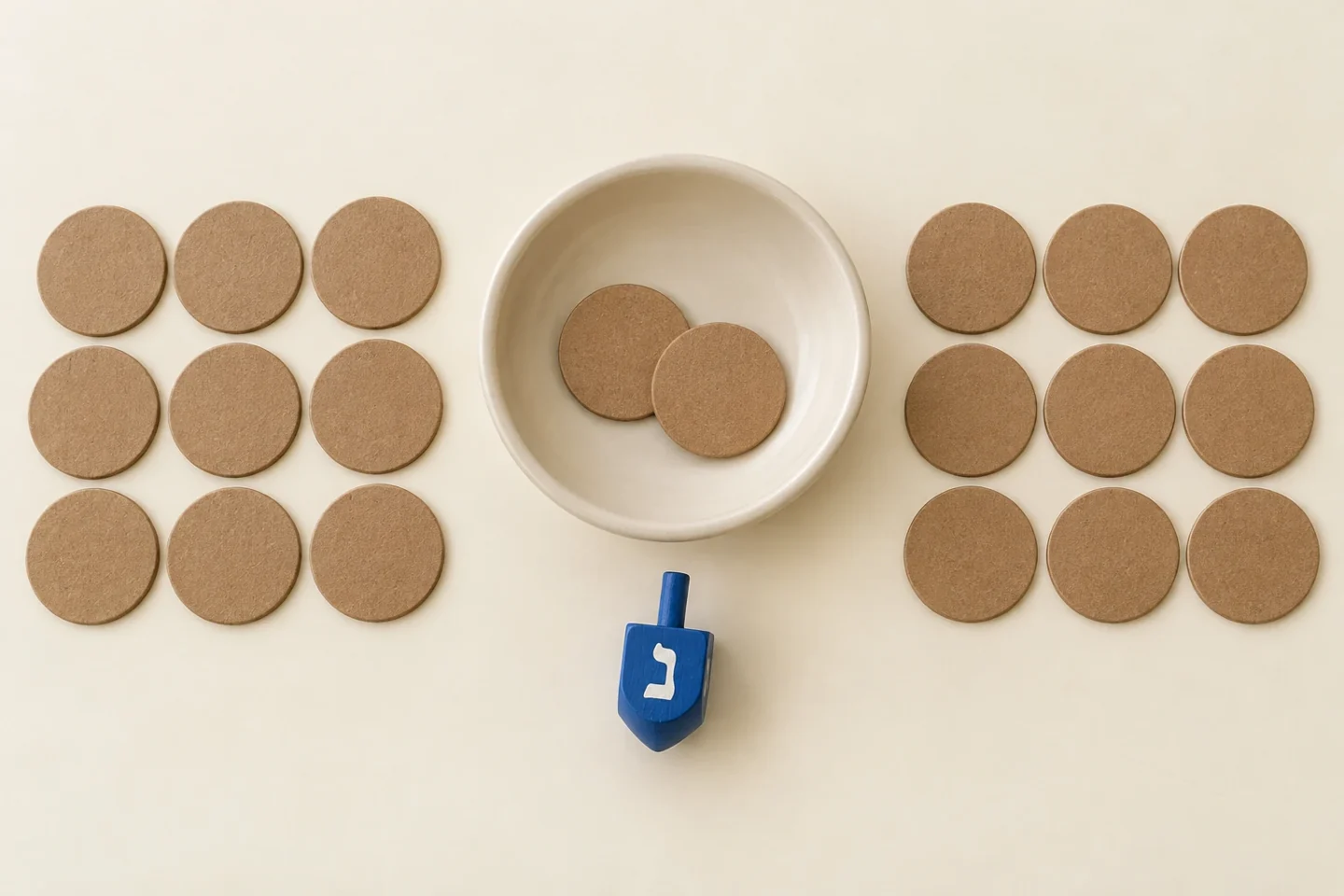
Nun means no counters move. Gimel means take the whole pot. Hey means take half the pot; in this guide, leave the extra counter when the total is odd. Shin means put one counter into the pot. Show the letter and action together.
4. Practice without scoring
Let each child try spinning while everyone names the visible top-facing side when the dreidel rests. Move a sample set of counters for that letter. A steady flat surface helps. Children can ask an adult or partner to spin if the motion is difficult.
5. Play around the table
Choose a starting player and continue clockwise. The player spins once, checks the resulting letter, and moves counters according to the rule. Give them time to count before the next person spins. Other players can help count without taking over the turn.
6. Handle half clearly
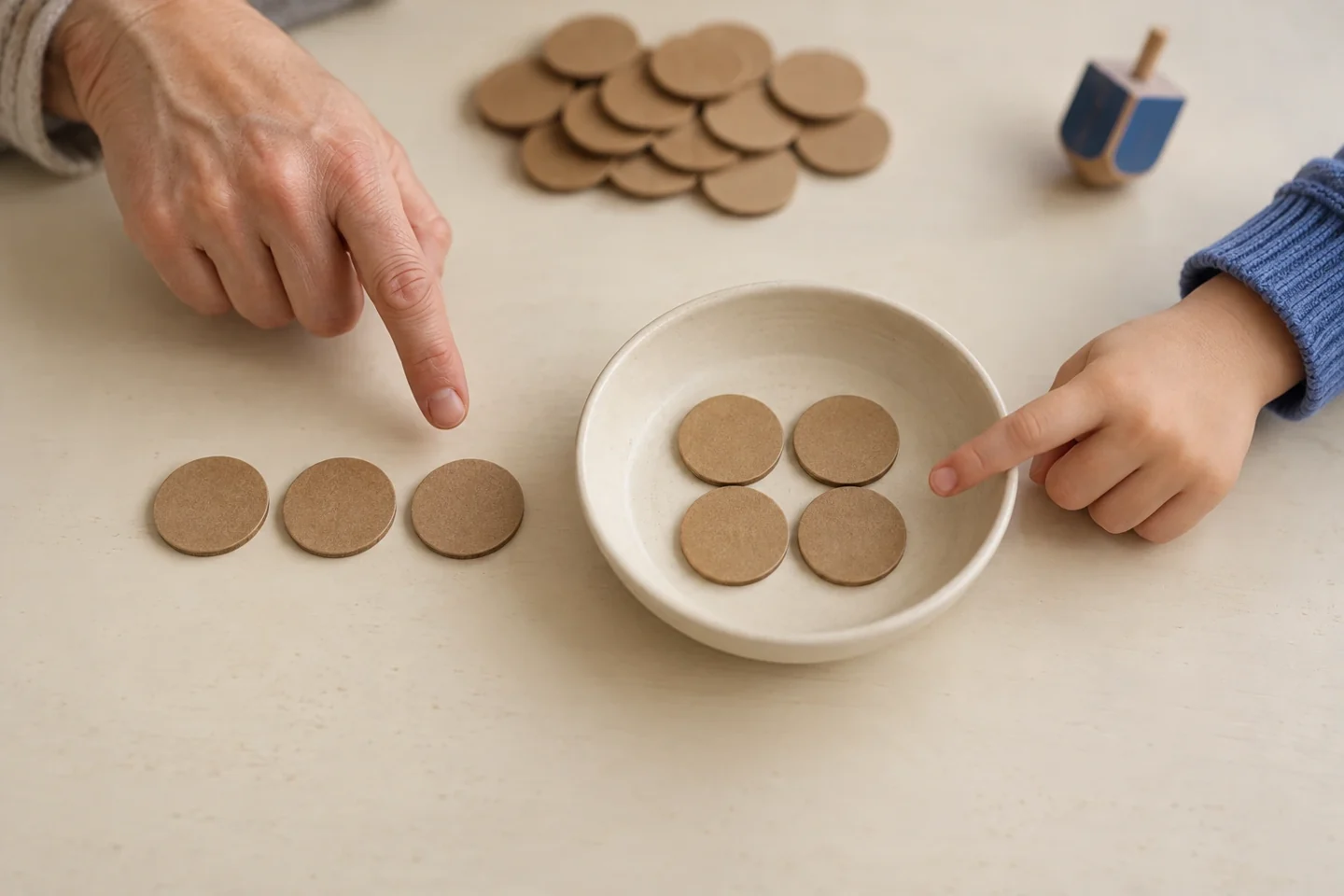
If hey appears with seven counters in the pot, the player takes three and leaves four. With six, they take three and leave three. State this chosen odd-counter rule before play; families may know another variant, and can agree on that instead.
7. Refill an emptied pot
After someone takes the whole pot, each player contributes one counter to begin again. Use the same refill rule whenever the pot is empty. For this short cooperative practice version, if a player cannot contribute, pause and return all counters to two equal piles of ten, or to equal starting piles for your chosen number of players. Begin another practice round together; no extra counter supply is needed.
8. Finish the session
Stop after an agreed time or number of turns and return all counters to the storage bowl. If using traditional elimination rules, a player unable to contribute is out; explain that separately. The cooperative practice variation lets everyone keep practicing rather than ending their involvement early.
Talk, notice, and learn together
Ask how the pot changed after a turn and whether a pile grew or shrank. Taking half gives older children a concrete example of equal groups and odd totals. Spinning outcomes are chance events; a letter is not earned by good behavior or guaranteed by a particular wish.
Make it work at home or in a classroom
For beginners, use an adult rule reader and fewer counters. Older children can record the pot size before and after a turn. In a classroom, work in small groups and name the game’s Hanukkah connection before explaining the modified cooperative option. Use large pieces and supervise younger siblings around the game.
Helpful fixes and cleanup
If the dreidel rolls off the table, place the game inside a shallow tray large enough to spin freely. If counters become mixed, pause and identify pot and player spaces again. Photograph or write the agreed rules for future sessions, and store the dreidel with its counters.
A useful way to extend the activity
Before the first round, practice moving counters for each outcome using a small sample pot. Keep the four action reminders visible with their verified letters. A child does not need to identify Hebrew independently to take part. When two adults know different family rules, agree on one version aloud before starting so players are not corrected for following the rule they were taught.