Nature & Outdoor Adventures
Leaf Detective: A Fall Leaf Observation Activity for Kids
 Facebook
 Pinterest
 X
X LinkedIn
 Reddit
 WhatsApp
 Telegram
 Bluesky
 Email
Email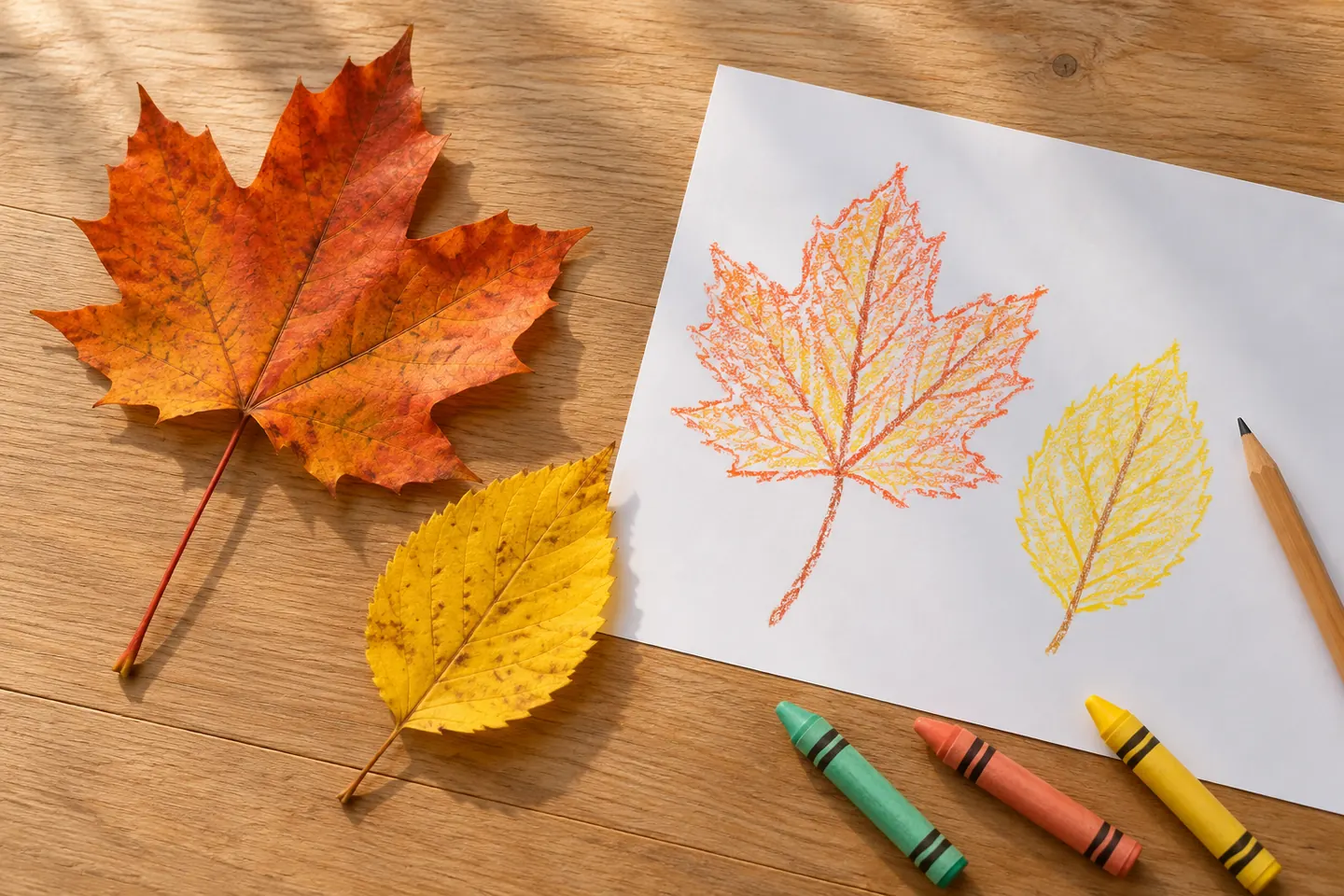
Two leaves can hold a surprising number of differences. One has a smooth edge; another has little teeth. One is rounded, while another stretches into a narrow point. Leaf Detective invites children to look closely, draw a detail, and tell someone what they noticed.
Use two leaves from a known safe source or observe leaves still on a plant. Green leaves work just as well as autumn colors, so the activity can fit the season you have outside.
At a glance
- Suggested ages: 4–9, with adult help choosing materials and recording words.
- Preparation: About 10 minutes for one set; allow longer for classroom stations.
- Activity time: 20–35 minutes, with an optional short outdoor walk.
- Group size: One child, siblings, pairs, or a classroom center.
What you need
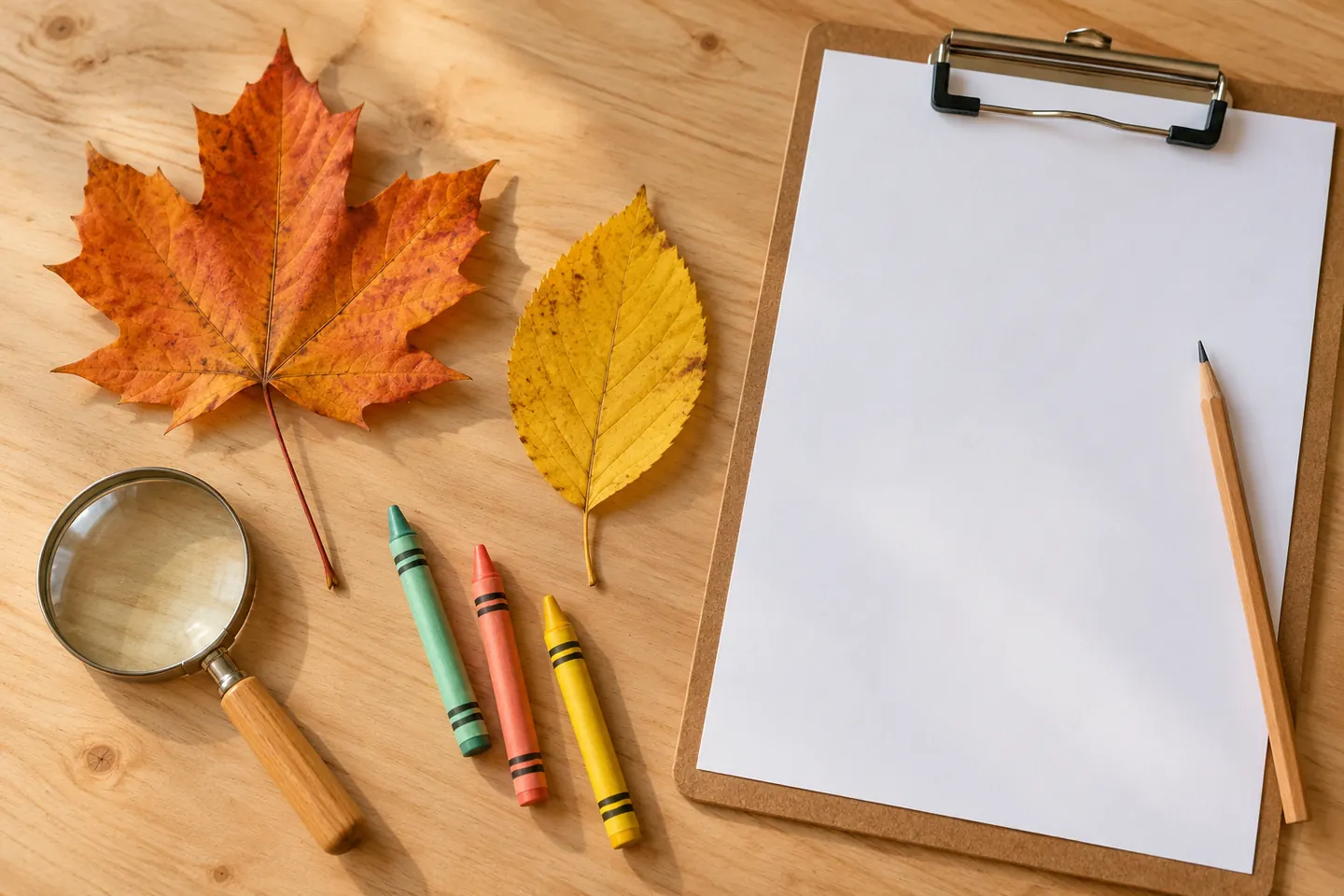
- Two clean, dry leaves selected by an adult from a known safe source.
- Plain paper, pencil, and crayons.
- A tray and firm drawing surface.
- An optional third leaf, ruler, or magnifier.
For 24 children in pairs, prepare 12 stations with two leaves each: 24 leaves total. A third at every station brings the total to 36. Offer a recording sheet and shared crayons per pair. Keep magnifiers away from direct sunlight and never look at the sun through one.
Get ready
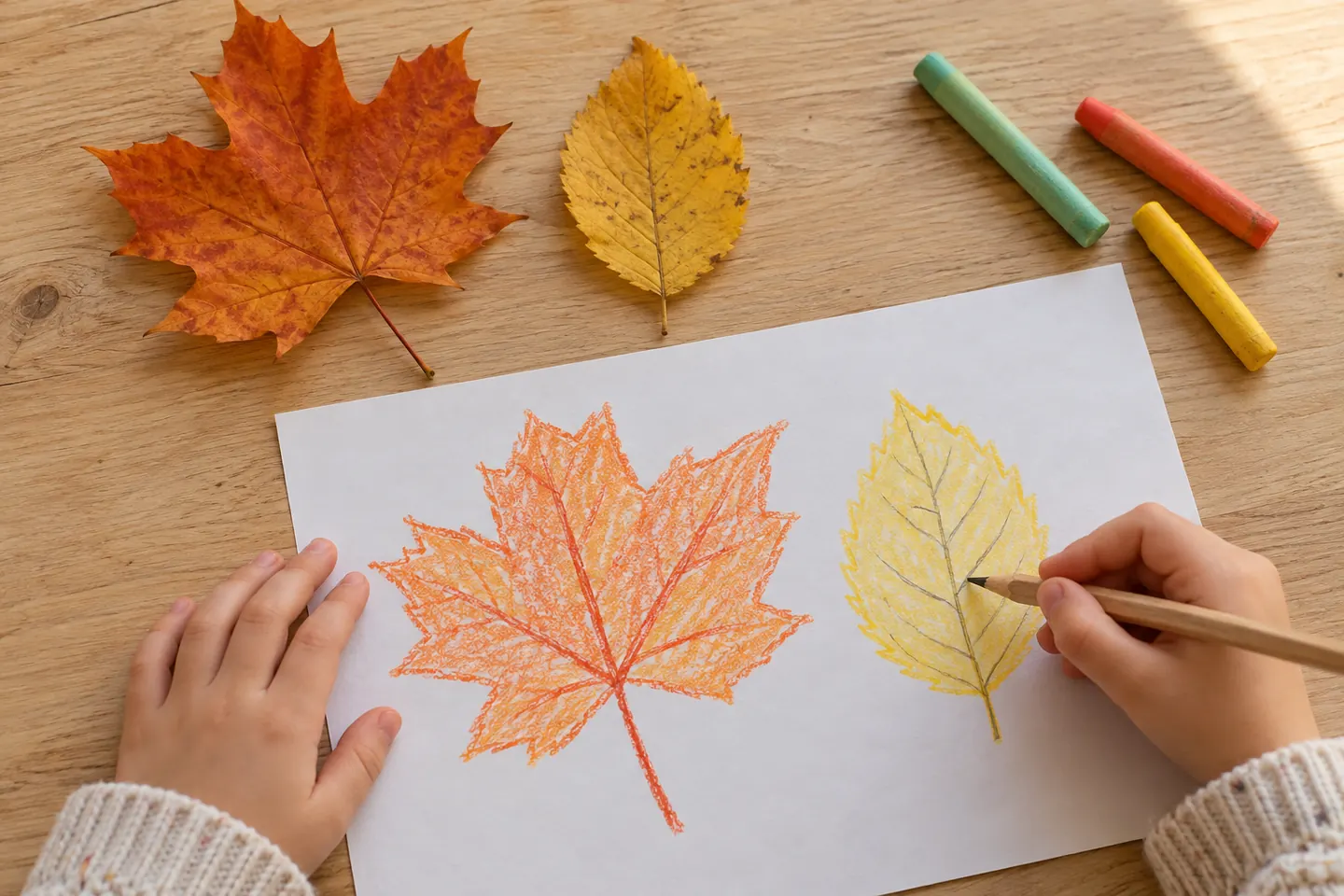
Draw two large observation boxes on a sheet, labeled Leaf A and Leaf B. Leave room beneath them for notes about shape, edge, veins, and color. Adults check the leaves; avoid unfamiliar, irritating, or deteriorating materials. Observing attached leaves or clear photographs is another option.
Be a leaf detective
1. Compare the whole shapes
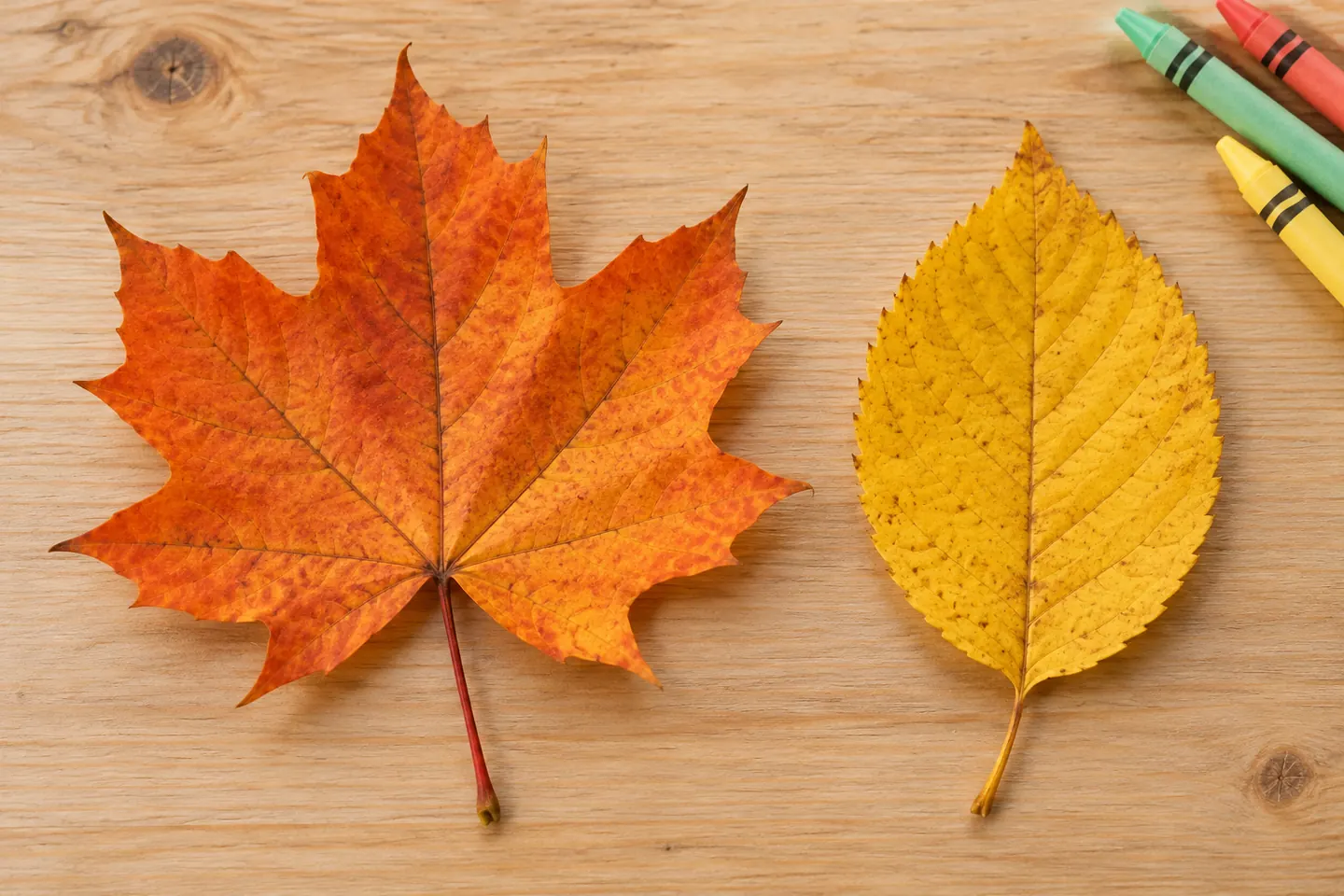
Place the leaves side by side. Ask what looks different first. Try words such as long, round, narrow, or lobed—meaning broad sections that project from the leaf’s outline.
2. Explore the edges
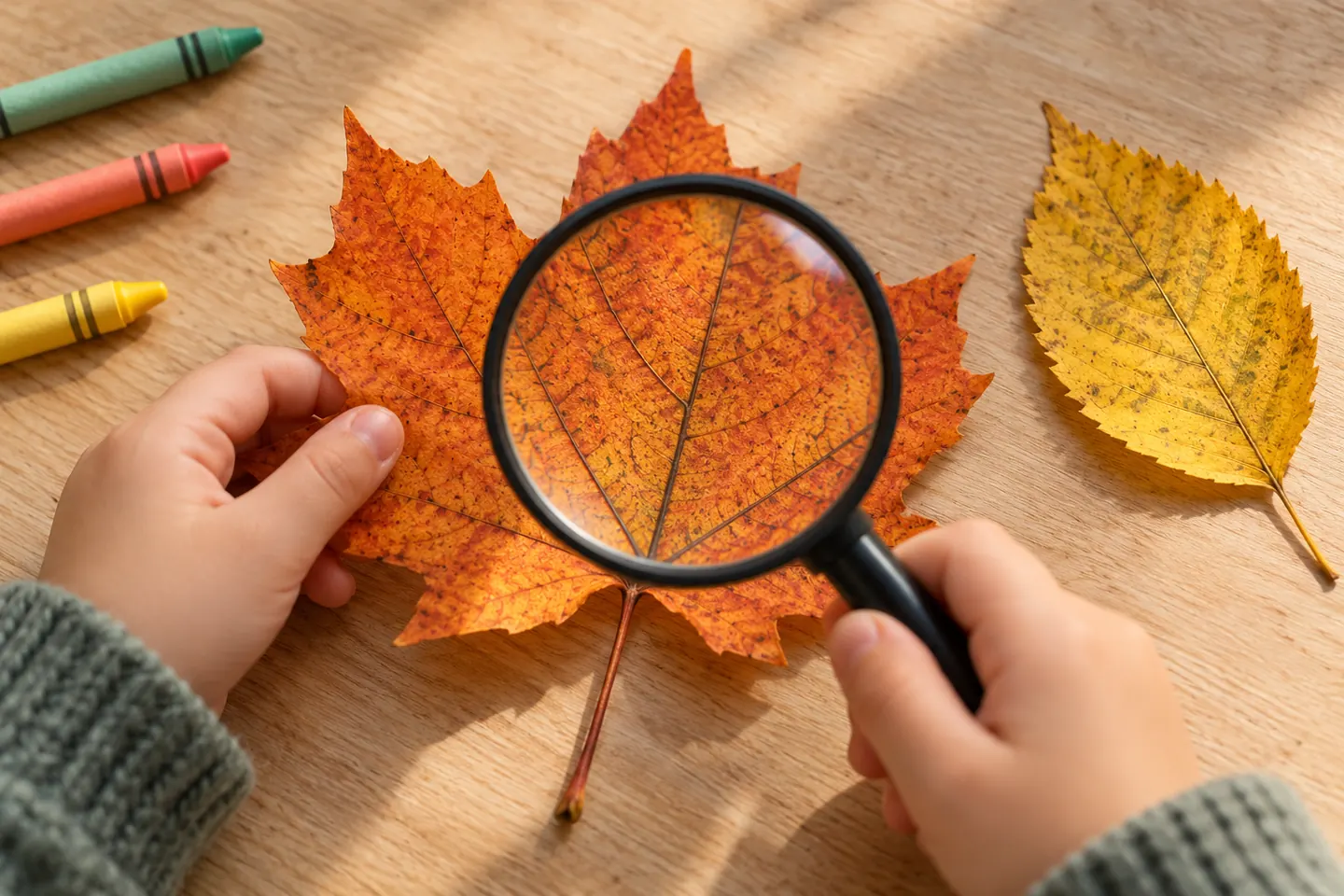
Follow the edge with your eyes. Is it smooth, toothed, or curved? A magnifier can help with small features. Handle delicate leaves gently so the outline stays intact.
3. Find the veins
Look for the lines running across the leaf. Some branch from a central line; others spread from near the stalk. Trace the pattern in the air or draw just the larger lines.
4. Notice colors and surfaces
Look for more than one color in a leaf, then turn it gently to compare its sides. Children can describe a surface by looking; touching an adult-checked leaf is optional.
5. Draw a discovery
Sketch an outline in each box and add one detail you noticed, such as a toothed edge or branching veins. An adult can write the child’s words underneath. A simple record is enough.
6. Try a sorting rule
Add the third leaf and group by one feature: size, color, or edge. Ask what rule was used, then try another. An “unsure” space can hold a leaf that is difficult to place.
7. Share one finding
Invite a child to point to a detail or explain something they missed at first. Ask which part they would like to investigate more closely next time.
Save your discoveries
Copy this layout onto paper and add your own observations. Drawings or dictated notes work well, too.
| Feature | Leaf A | Leaf B |
|---|---|---|
| Overall shape | Draw or describe | Draw or describe |
| Edge | Draw or describe | Draw or describe |
| Colors noticed | Record | Record |
| Vein pattern | Draw | Draw |
| One comparison | Write, draw, or dictate a similarity or difference | Add another detail if wanted |
A little leaf science
Leaves help many plants make food using light. Their veins carry water and other materials through the leaf. In many deciduous trees, autumn changes in pigments bring new visible colors, but color alone does not identify a species. A name is optional for this activity; careful descriptions are already useful.
At home and in the classroom
At home, compare two leaves together at a table. In class, pairs can swap observing and drawing roles, then share one finding with another pair. Keep collected leaves in trays and leave outdoor plants undisturbed when observing them in place.
Make it work for your group
Offer larger examples, broad crayons, spoken notes, or a partner drawing. Older children can measure length consistently from the stalk end of the blade to its tip, or compare several leaves with the same rule.
Helpful fixes and cleanup
Leaves too similar? Look for one small difference. Brittle leaf? Observe without handling or use another checked example. Writing slows the fun? Dictate a phrase. Return supplies, dispose of deteriorating leaves, and wash hands after handling outdoor materials.