Nature & Outdoor Adventures
Backyard Bird Observation for Kids: Look, Listen, and Keep a Nature Journal
 Facebook
 Pinterest
 X
X LinkedIn
 Reddit
 WhatsApp
 Telegram
 Bluesky
 Email
Email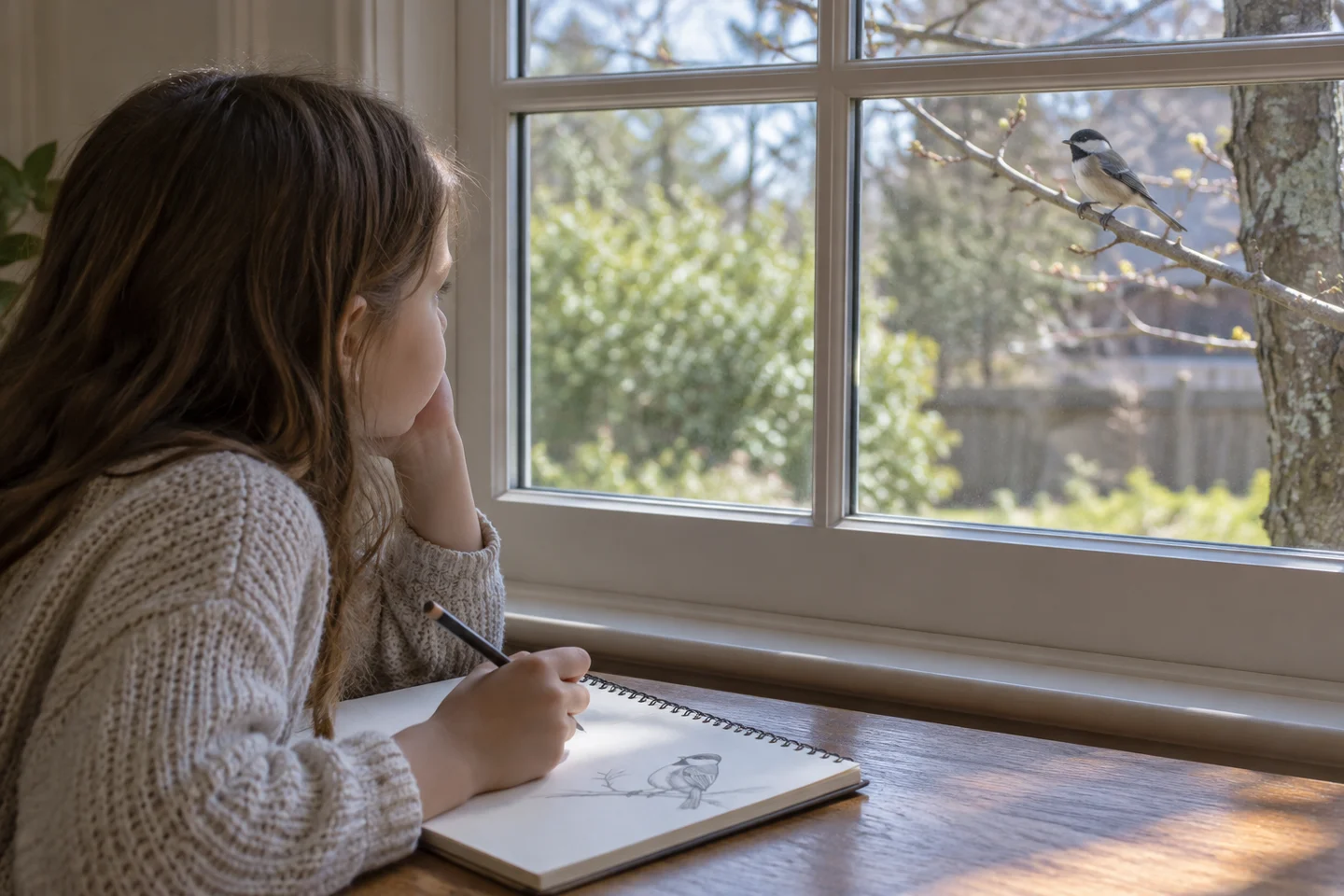
A bird hopping along a fence or pausing in a tree can turn an ordinary view into a small nature investigation. Children watch from a comfortable distance, sketch what they notice, and collect questions in a simple bird journal.
You can begin in a yard, from a school window, or beside a familiar path. No special equipment or confident bird identification is needed to enjoy noticing movement, shapes, and sounds.
At a glance
| Detail | Plan |
|---|---|
| Suggested ages | 5–10 |
| Preparation | About 5 minutes |
| Activity time | 10–15 minutes watching, then 10 minutes recording |
| Group size | One child, pairs, or a small supervised group |
| Mess level | Low |
What you need
- Paper or a small notebook.
- A pencil and optional crayons.
- A clipboard or firm backing.
- Optional binoculars appropriate for supervised use.
For 24 children, offer individual sheets or 12 paired journals and shared crayons. Binoculars are optional; an adult shows how to use them and ensures they are never pointed at the sun.

Choose a watching spot
Select an accessible place where children can stay safely while looking around. Keep a respectful distance from birds and nests. Avoid feeding, chasing, or approaching wildlife for this activity. A window view can provide a comfortable alternative when weather or access makes outdoor observation difficult.
Start a bird record
1. Look before drawing
Watch branches, fences, rooftops, or the ground for a minute or two. When a bird appears, pause and notice its shape and movement before reaching for the pencil.
2. Pick a few details
Ask, “What stands out?” A long tail, pale chest, or hopping movement gives the observer something specific to save. If a color is hard to see, a phrase such as “looked dark from here” is useful.
3. Sketch a quick shape
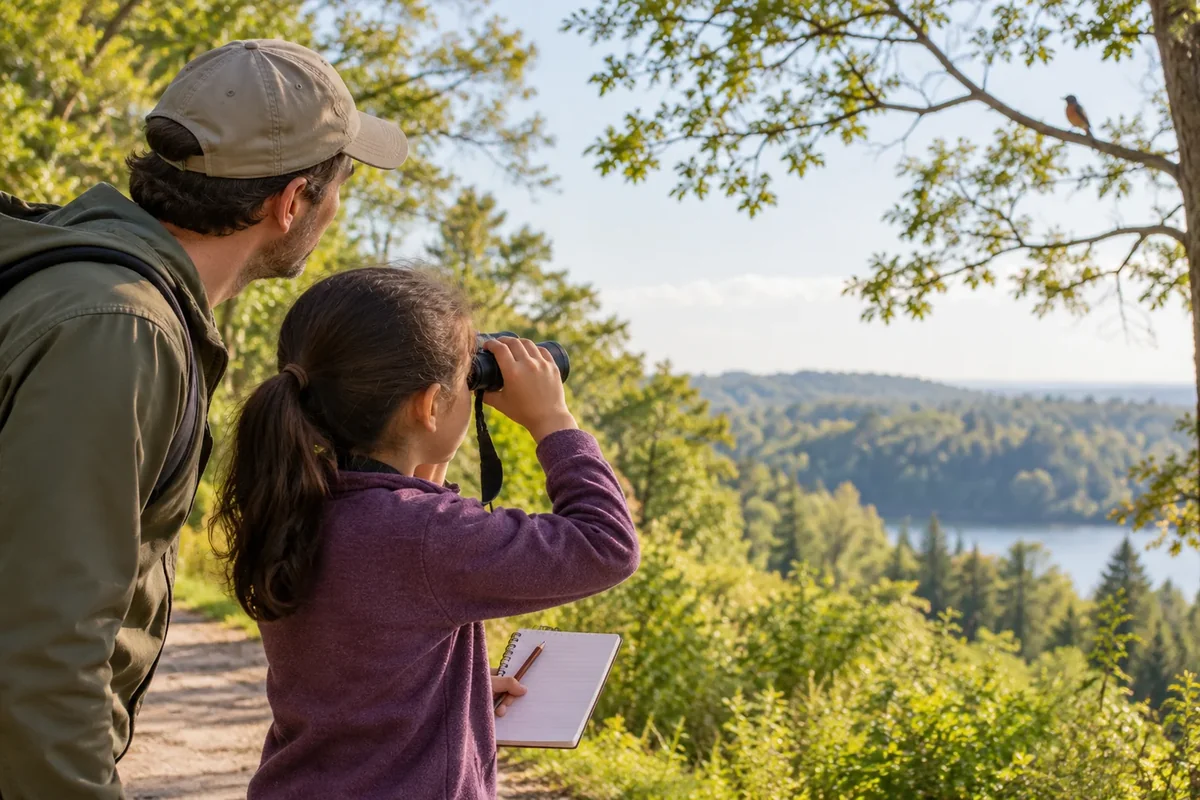
Try an oval body with a few lines for the beak, tail, and legs. Add a detail the child saw. The sketch helps them remember; it does not need to look like a field-guide illustration.
4. Record an action or sound
Write or dictate “hopped along the fence” or “made a repeated chirp.” If the source of a sound is uncertain, record the sound without assigning it to a particular bird.
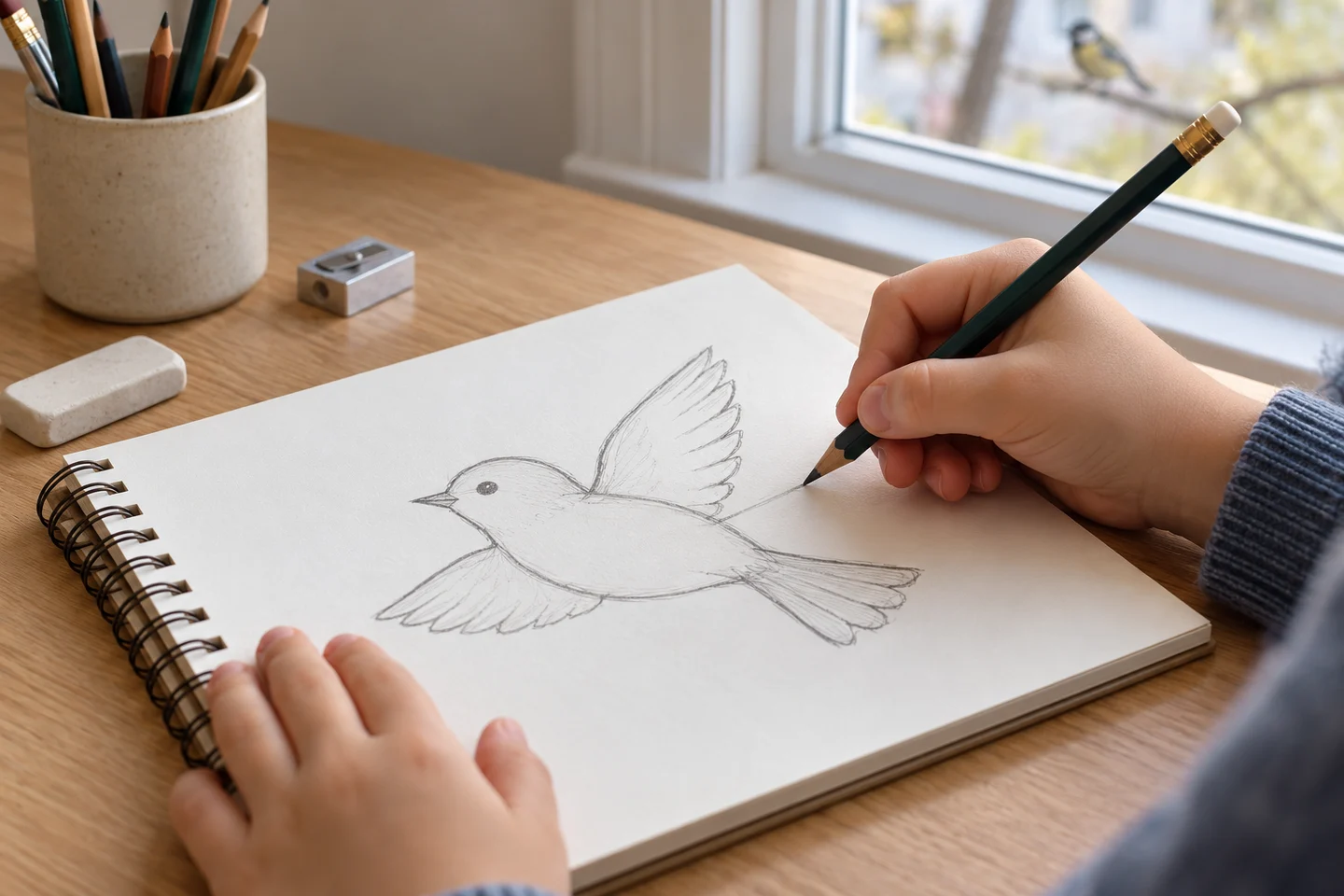
5. Add a question
Separate “I noticed” from “I wonder.” “It carried something in its beak” is a useful observation; “Was it food?” is a question to explore. An adult can record both in the child’s words.
6. Return another day
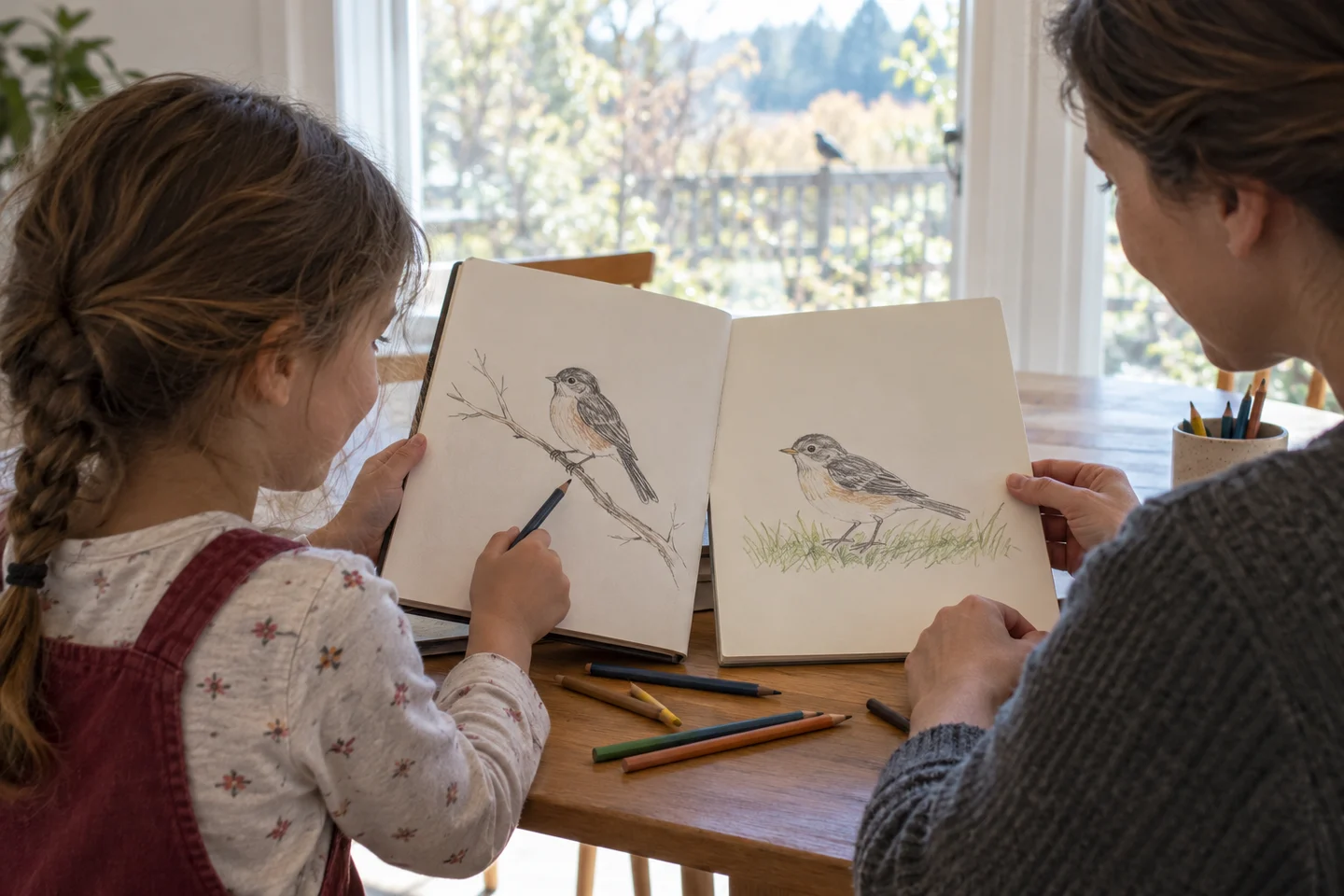
Add a date, approximate time, location, and a few weather words to each entry. Compare what appeared on two visits. Some birds may be absent, and that belongs in the record too.
Save your discoveries
Copy this simple layout onto paper and add your own observations. Drawing or dictated notes work just as well as independent writing.
| Prompt | Example of a useful entry |
|---|---|
| Where? | From the kitchen window, near the fence |
| What did I see? | One small bird with a long tail |
| What did it do? | Hopped twice, then flew into the tree |
| What did I hear? | Three short whistles; source uncertain |
| What do I wonder? | Does it return to the same fence? |
What children can explore
Bird watching combines patience, descriptive language, and comparison. Ask, “Which movement helped you notice the bird?” or “What would you like to watch next time?” A trusted field guide can help explore a possible identification later, using the details you recorded.
At home and in the classroom
At home, try five minutes from one window. In class, pairs can swap observing and recording roles. Compare the details children noticed rather than counting who saw the most birds.
Make it work for your group
Offer a seated viewpoint, larger drawing spaces, adult transcription, or verbal descriptions. If no birds appear, look for possible perches and sketch the view for a return visit. Older children can compare several dated records while remembering that short visits show only part of the day.
Helpful fixes and cleanup
Fast-moving bird? Sketch from memory and note that. Unclear name? Keep a descriptive label. Distracting view? Focus on one tree or fence. Gather journals and supplies, leave wildlife undisturbed, and choose a time to return.