Winter & New Year’s
Make a Winter Window Observation Journal
 Facebook
 Pinterest
 X
X LinkedIn
 Reddit
 WhatsApp
 Telegram
 Bluesky
 Email
Email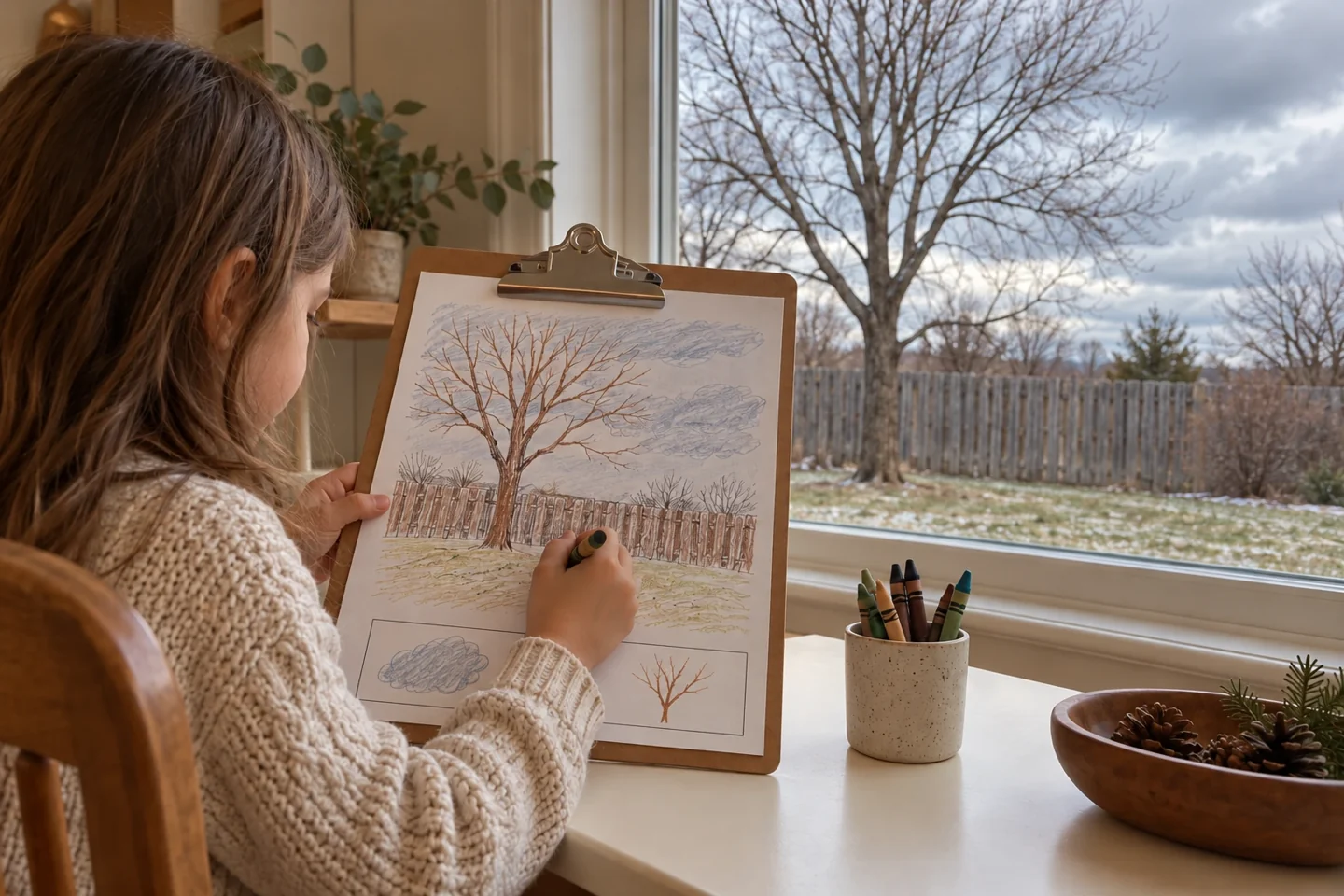
Your activity at a glance
| Suggested ages | 4–9 years |
|---|---|
| Activity time | 15 minutes to prepare; 5–10 minutes per visit |
What you need
- 4 full-size sheets of paper
- Pencil and crayons or colored pencils
- Clipboard or folded cardboard writing support
- Optional large envelope for keeping the four pages in order
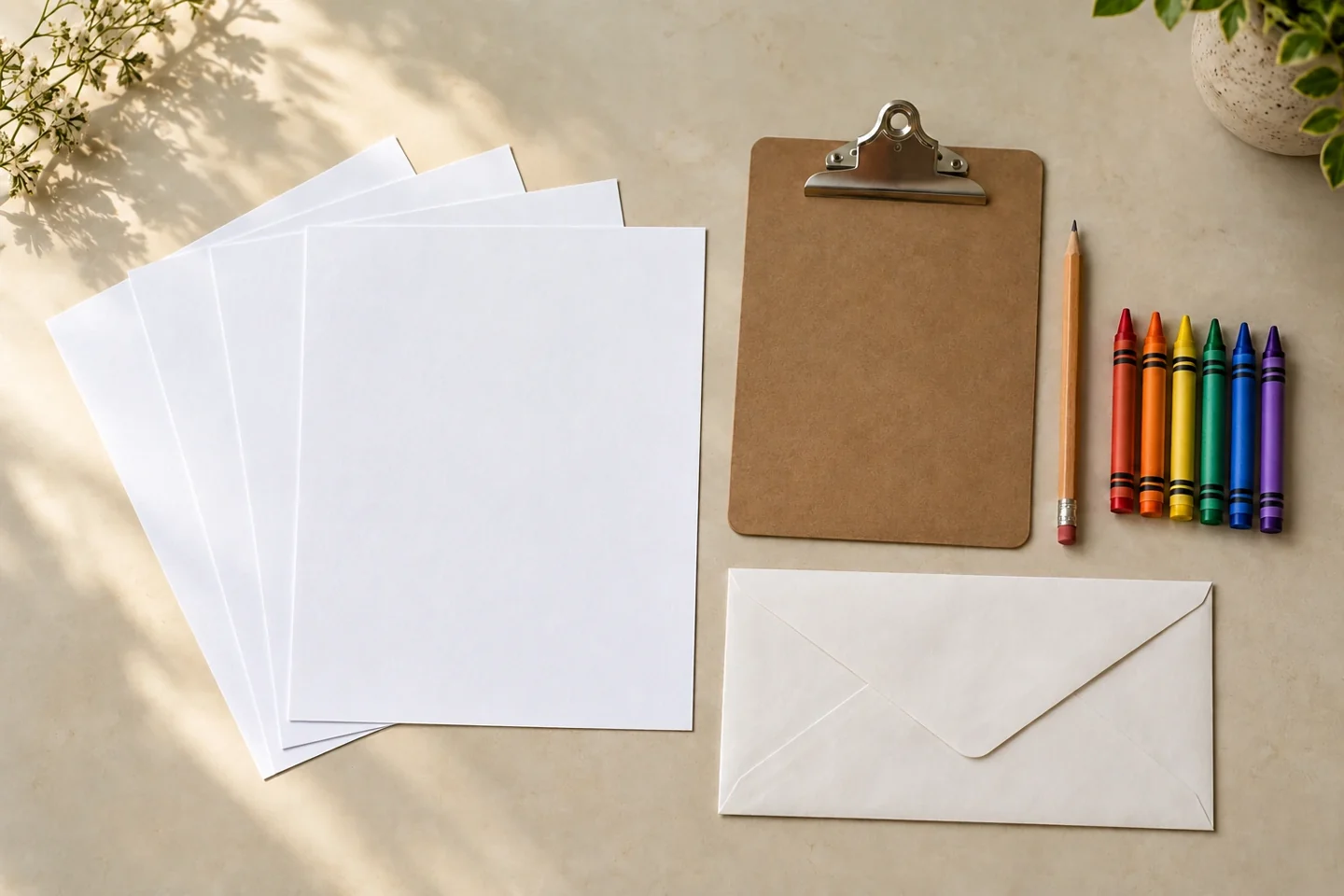
Discover changes in a familiar view
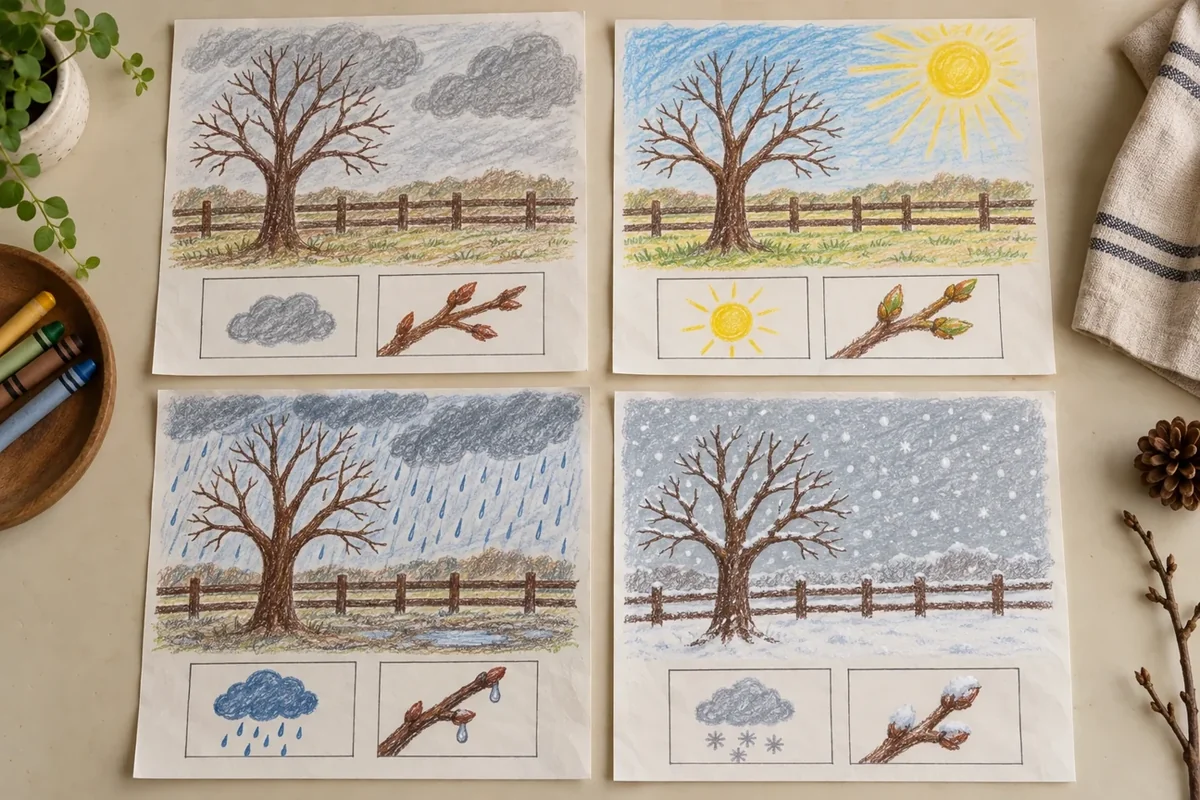
A familiar window can become a small observation station. Children draw what they actually notice outside: bare branches, moving clouds, a bird visiting a fence, or sunlight crossing the ground. The journal works just as well on a winter day without snow. A few short visits are enough to reveal that the same view does not stay exactly the same.
Before you begin
Clear a comfortable viewing spot and choose two landmarks that will remain visible, such as a tree and fence post. Place the clipboard on a table rather than leaning on the window. A view of rooftops, sky, or a small courtyard offers plenty to notice even without a garden.
Prepare the first page before inviting children to observe. Draw a large picture space and two small boxes, leaving most of the page open. Decide when you will revisit the window so the journal becomes a sequence of short observations instead of a one-time drawing exercise.
Make it step by step
- Choose one comfortable view. Select a window children can see through while standing or sitting safely on the floor. Avoid a spot requiring climbing onto furniture. Look together before preparing any pages: is there a tree, fence, roof, or patch of sky worth revisiting? Choose two fixed landmarks to help everyone recognize the same view next time.
- Prepare a simple page. Leave all four sheets full size for generous drawing space. With a pencil, divide the first page into a large picture space and two small boxes for weather and something that changed. Children can draw symbols instead of writing. An adult may record their exact words, keeping the distinction between what they saw and what they guessed.
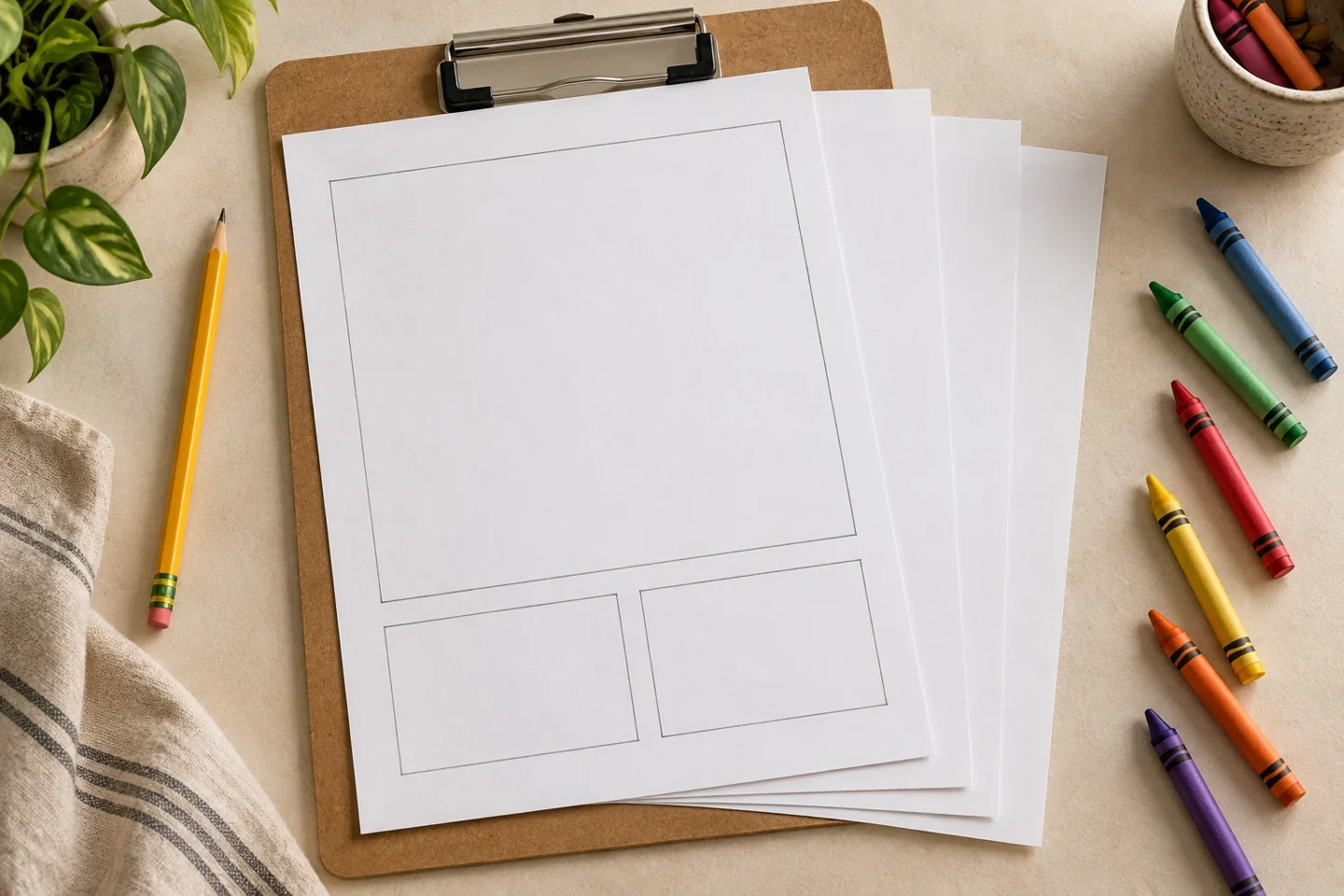
Four full-size sheets stacked, first with one large empty picture space and two small empty boxes along bottom. - Watch before drawing. Spend one quiet minute looking. Suggest noticing something still, something moving, and something far away. Do not require a bird or dramatic weather: a shadow, a swaying twig, or a cloud is enough. Then ask children to select just two or three details so drawing does not become an overwhelming attempt to copy everything.
- Record the observation. Draw the landmarks first and add the selected details. Talk about the weather using visible evidence: a wet pavement suggests recent rain, while moving branches show movement without measuring wind speed. Avoid claiming an exact temperature from a picture. Children may add a short description, dictate a sentence, or simply point to what they have recorded.
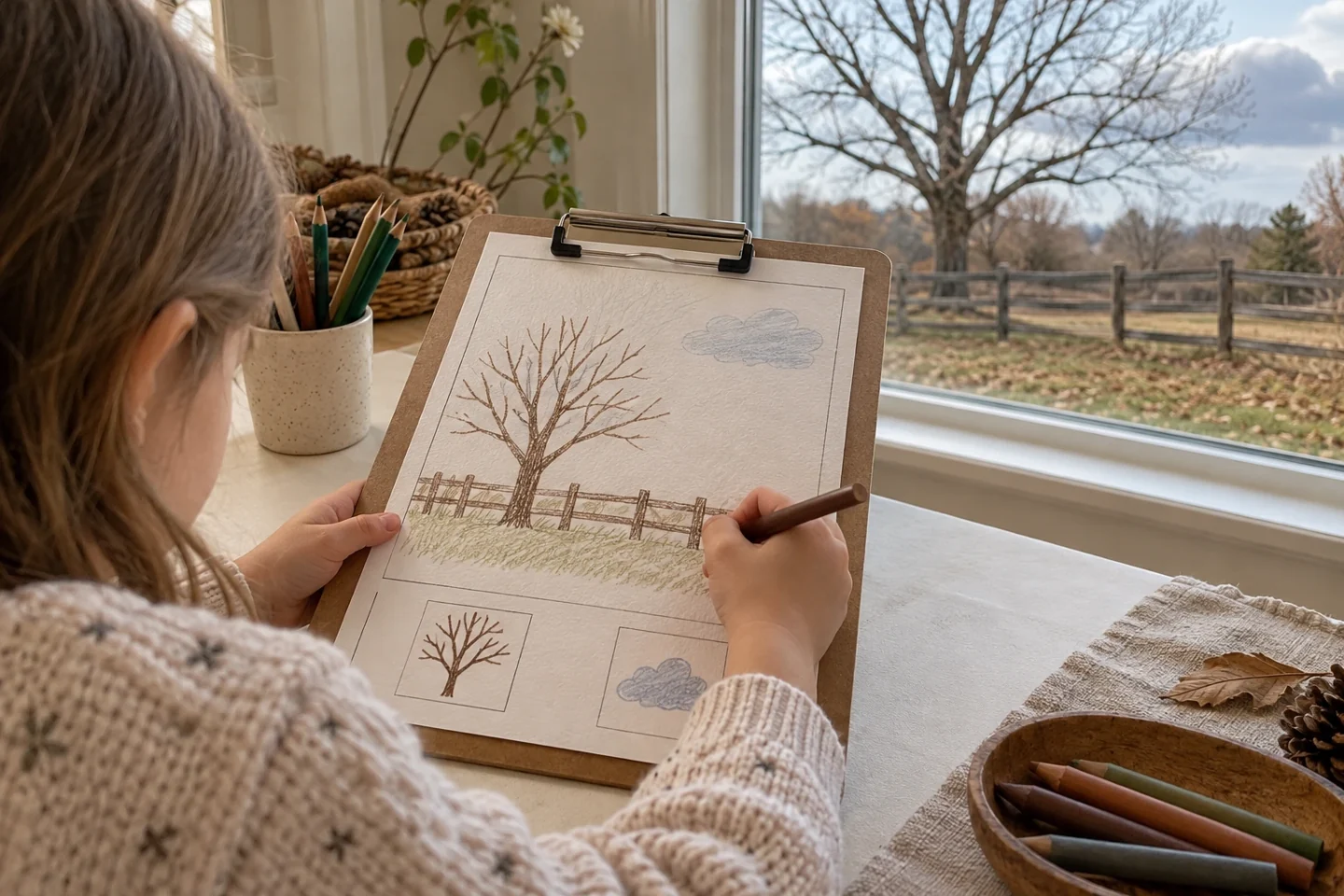
Close first crayon drawing of bare tree fence and moving cloud on clipboard, actual same landmarks visible outside. - Return and compare. Revisit the same spot on another day or later in the day. Place the earlier drawing beside the new page and ask what stayed the same. Circle a changed detail on the newer picture. Keep the four pages together as a small journal. It is the comparison, not artistic accuracy, that makes the activity useful.
Talk, notice, and explore
Ask, “What stayed in the same place, and what moved?” A cloud or branch may move while the tree trunk remains fixed. Follow up with, “What can you see that helped you decide?” This makes a useful distinction between a visible observation and a reasonable guess.
On the next visit, ask children to find one detail from their previous picture before adding anything new. Compare shadow positions or the amount of cloud without requiring precise weather measurements. The drawings record what each child noticed, so two pages can differ without either observer being wrong.
Try comparing a morning page with an afternoon page made on the same day. Select one feature to follow, such as where sunlight touches a fence, rather than redrawing every detail. Children may notice a change even when the weather looks similar. Keep the observation times on the back for the adult’s reference.
Make it work at home or in a classroom
Younger observers can choose between two drawn weather symbols and add one large picture. Older children can compare the same view at similar times or record shadow directions. For a class, make one shared journal first, then offer individual pages at a supervised window station. A photographed view can provide a seated alternative.
Helpful fixes, cleanup, and keeping the result
If children cannot think of a detail, offer a narrower prompt such as finding one line or one moving object. A blurry drawing can still hold a useful dictated observation. Keep pages in order without grading the pictures. Store the journal near the station so the next observation is easy to begin.