Winter & New Year’s
Make a New Year’s Paper Countdown Chain
 Facebook
 Pinterest
 X
X LinkedIn
 Reddit
 WhatsApp
 Telegram
 Bluesky
 Email
Email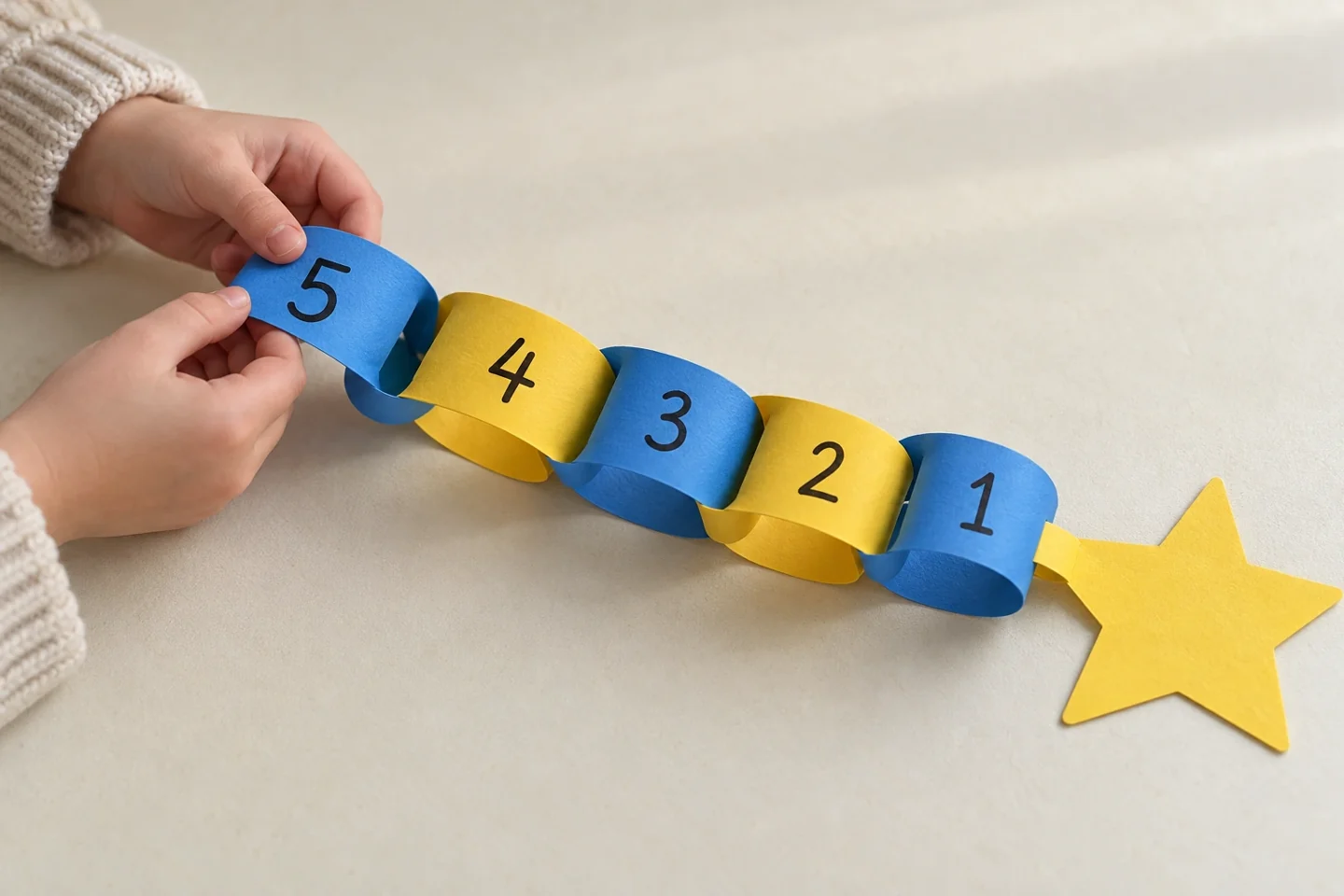
Your activity at a glance
| Suggested ages | 4–8 years |
|---|---|
| Activity time | 25–35 minutes |
What you need
- 2 sheets of colored paper for five strips, each 3 × 20 cm
- One cardstock scrap for a large star about 10 cm across and a small attachment tab
- Pencil, crayons, ruler, and child-friendly scissors
- Paper tape or glue stick
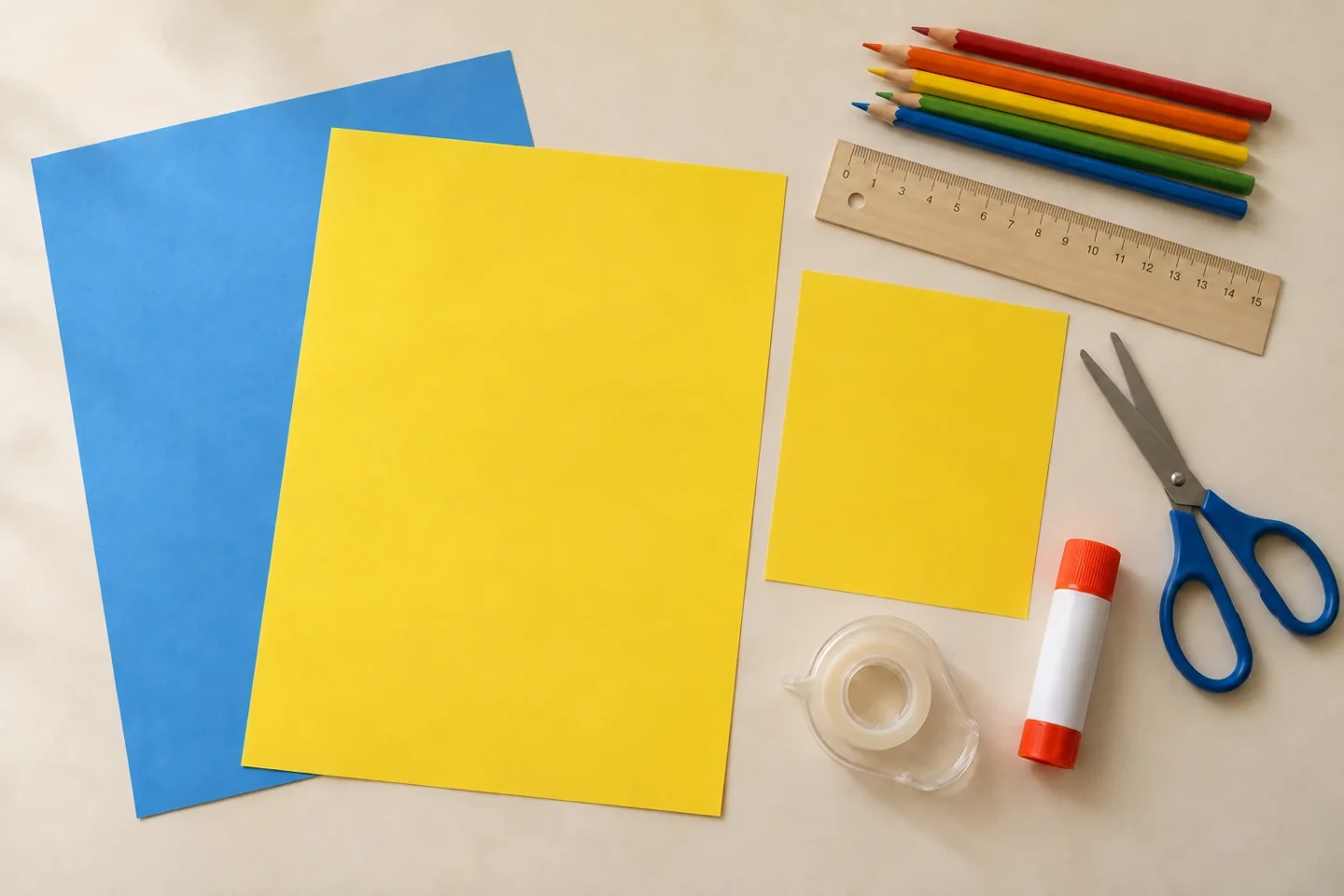
Count down to a celebration that fits your day
Choose a celebration time that works for children, then count toward it with a paper chain. A daytime party or an afternoon family gathering can be just as exciting as midnight. The chain makes the countdown visible: removing one link shows how many agreed intervals remain, whether those intervals are days, hours, or short activity turns.
Before you begin
Choose whether each link represents a day, an hour, or a completed activity. For a short daytime celebration, five planned activities make a manageable example. Place the star at the final celebration point and explain the sequence before cutting any strips.
An adult can mark equal-width strips on colored paper. Prepare the numbers or dot quantities to match your chosen total, and keep tape easy to reach. Leave the strip ends undecorated so links will join securely. Plan a display spot that does not cross a walkway.
Make it step by step
- Choose a clear countdown. Decide what the links will represent before making them. For example, use five links for five short activities before an afternoon celebration. Avoid mixing days and minutes on the same chain. Tell children when one link will be removed, and write the plan on a separate adult reminder if the timing might be forgotten.
- Cut matching strips. Cut five strips for the example countdown about 3 × 20 cm. For a different plan, change the number of strips before numbering them. Put them in a row and count them together before adding numbers. Children can decorate the center of each strip, leaving about 2 cm at both ends clear so the joining surfaces stick reliably.
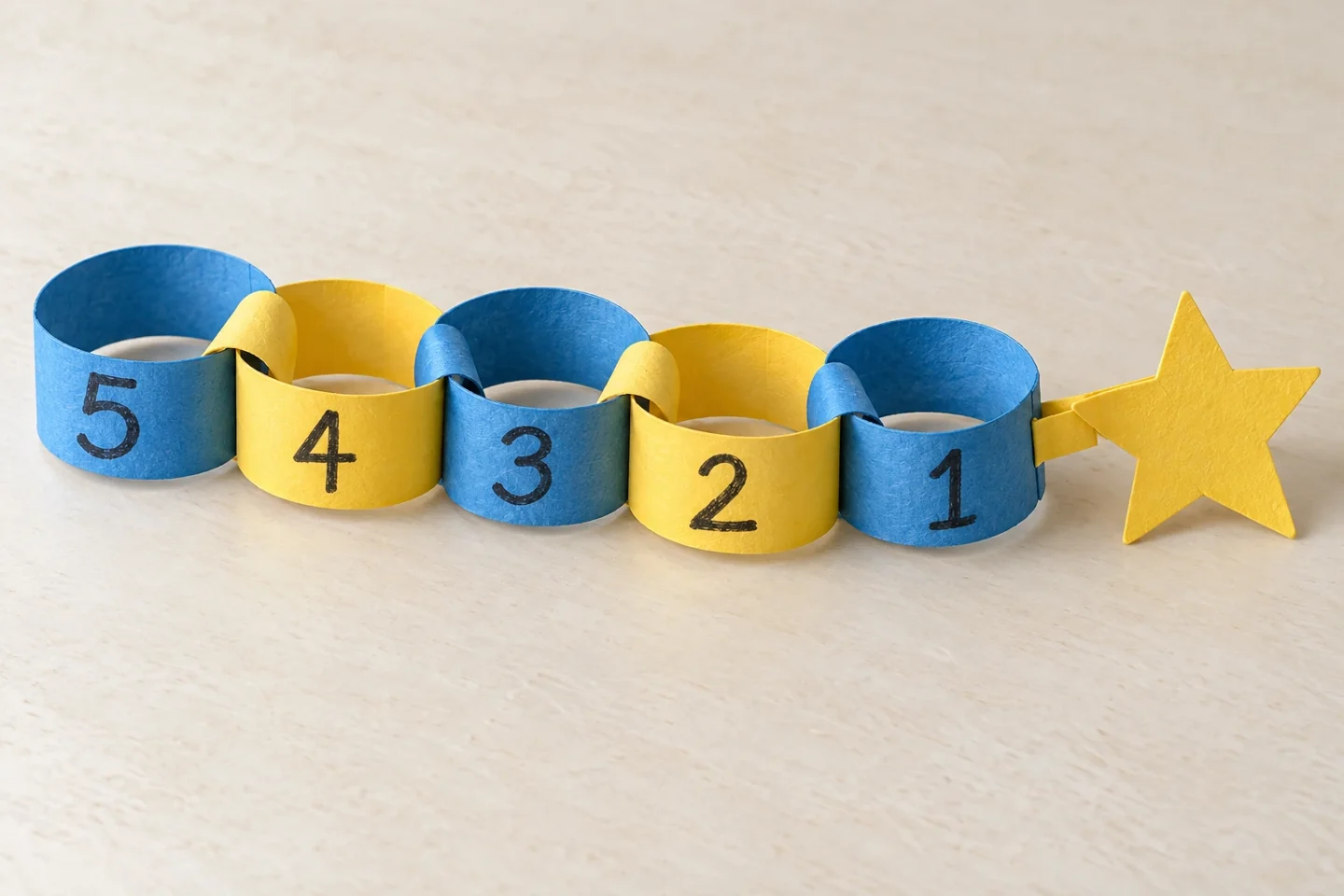
- Add the countdown order. For five links, write five, four, three, two, and one on separate strips. Place them in that order and read the sequence aloud. Children not yet using numerals can add dots for each quantity, or an adult can write numbers after the child chooses colors. Cut a star about 10 cm across from cardstock to represent the celebration itself, plus a small paper tab for attaching it.
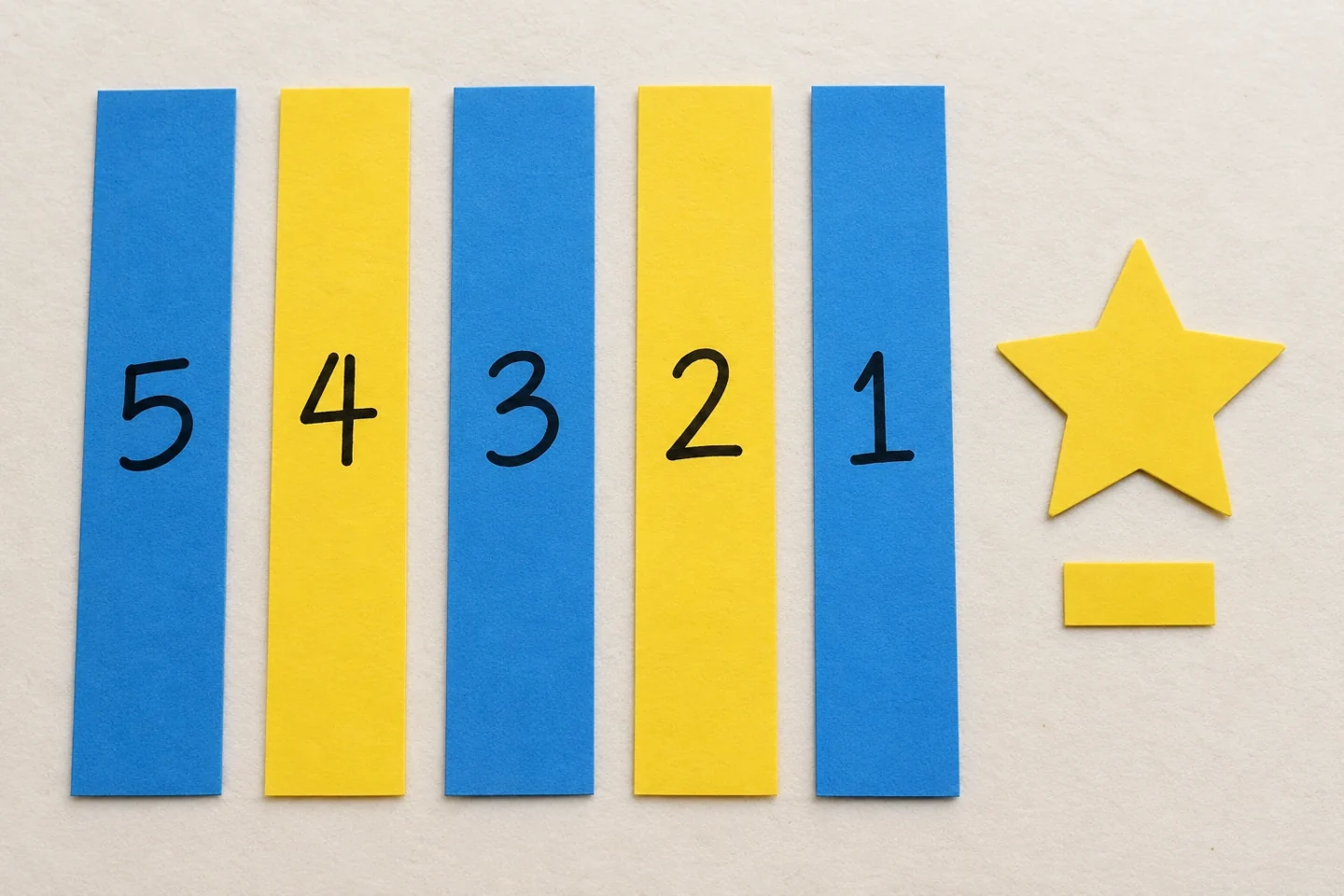
Five flat strips 3 by 20 cm in a row, each center marked with a clear single numeral 5 4 3 2 1, ends uncolored. - Join the chain. Curl the first strip into a loop and overlap its ends by about 2 cm. Secure with tape or glue. Thread the next strip through the completed loop before joining its ends. Continue checking the number order as the chain grows. Attach the last link near the star using a small paper tab.
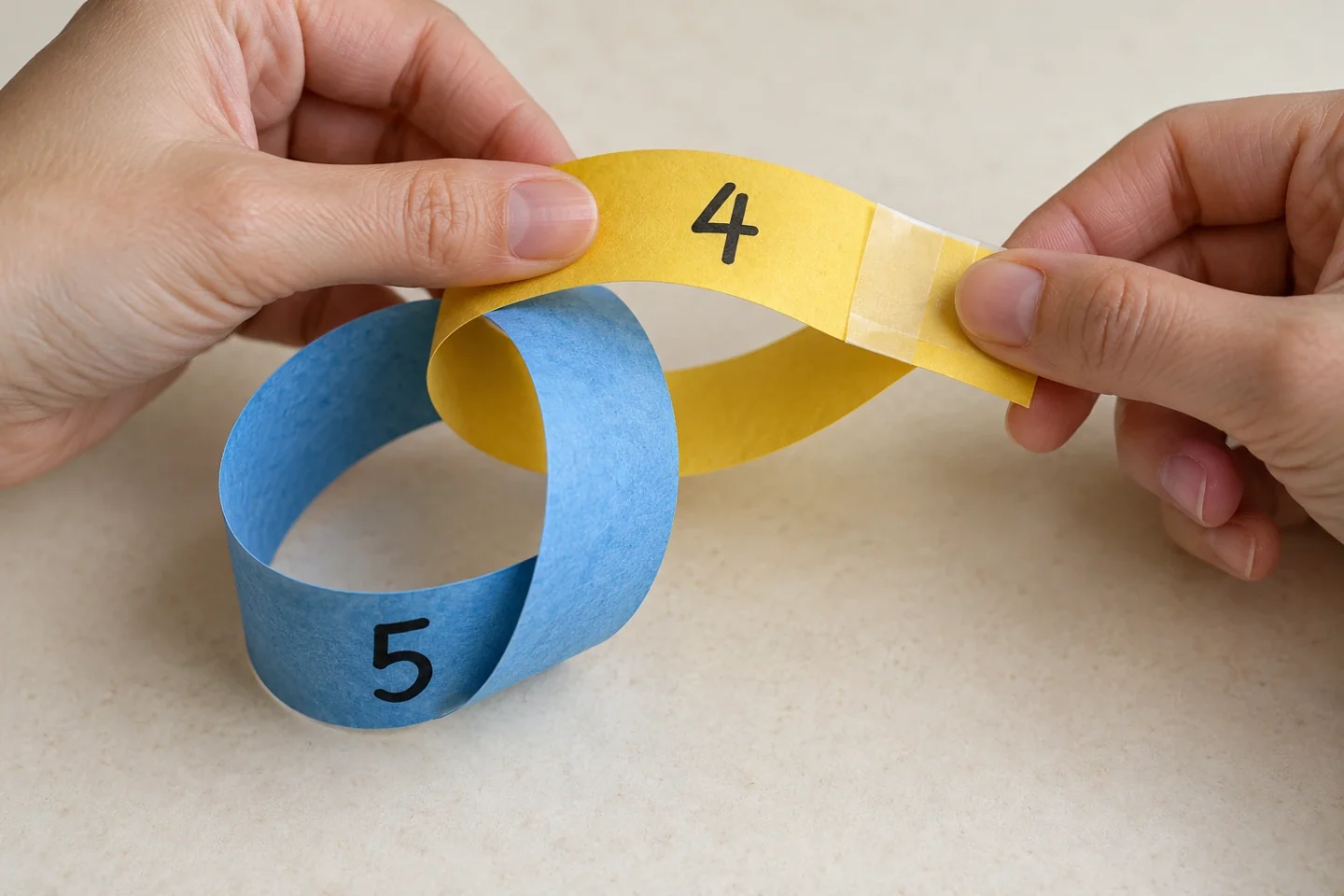
Close hands threading a new strip through completed loop before overlapping its ends 2 cm and pressing tape. - Use the countdown together. At each agreed interval, remove the first remaining link and count what is left. Explain that the chain records your plan; it does not make time pass faster. When the last link is removed, begin the chosen celebration: a shared snack, music, a story, or another planned activity. Keep the star as a simple decoration.
Talk, notice, and explore
Ask, “If we take away one link, will there be more or fewer left?” Let children remove a link and count the remaining ones to check their prediction. The chain makes a changing quantity visible without requiring written subtraction.
Compare the number on the next link with the number of links still attached. Ask where the chain begins and what happens after the last link. If the group changes its activity plan, revise the chain together so the model continues to represent the real countdown.
A child can become the countdown checker, looking at the remaining links after each removal. Rotate this role so several children have a turn. If someone removes an extra link by mistake, count together and add a replacement rather than abandoning the chain. Correcting the model is another chance to connect number and quantity.
Make it work at home or in a classroom
Younger children can count colors and help thread links while an adult joins them. Older children can compare ascending and descending number order or help plan the intervals. At school, a chain of classroom activities avoids expecting all families to follow the same evening schedule. Offer a flat strip version for easier handling.
Helpful fixes, cleanup, and keeping the result
If links come apart, the decorated ends may need a fresh plain tape tab. If the order is muddled, lay the chain flat and check it before displaying. Hang the chain well away from walkways, heaters, and neck height; it is a display, not something to wear. Recycle removed links or save them for collage.