Fall & Halloween
Pumpkin Pattern Games
 Facebook
 Pinterest
 X
X LinkedIn
 Reddit
 WhatsApp
 Telegram
 Bluesky
 Email
Email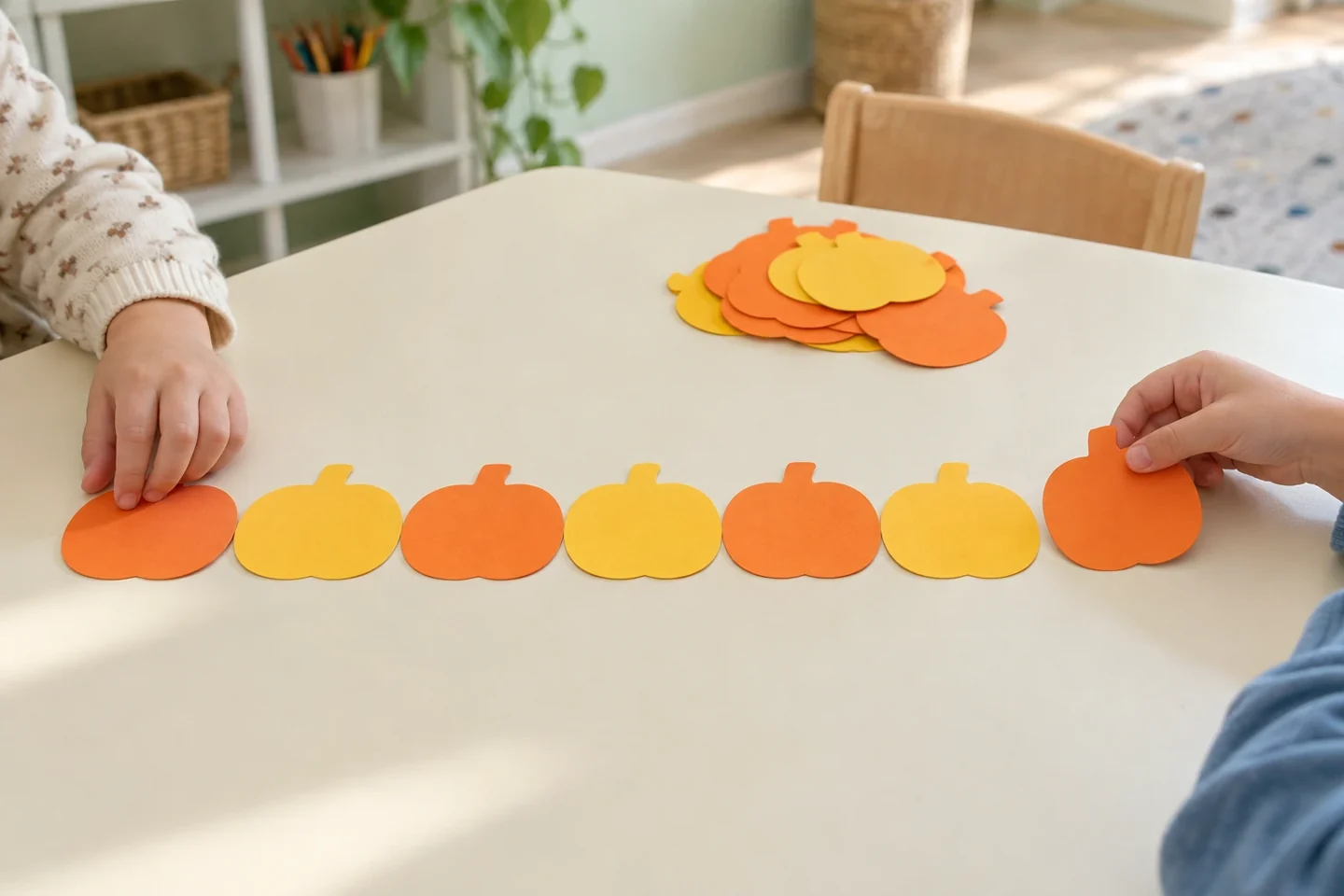
Your activity at a glance
| Suggested ages | 4–8 |
|---|---|
| Activity time | 20 minutes |
What you need
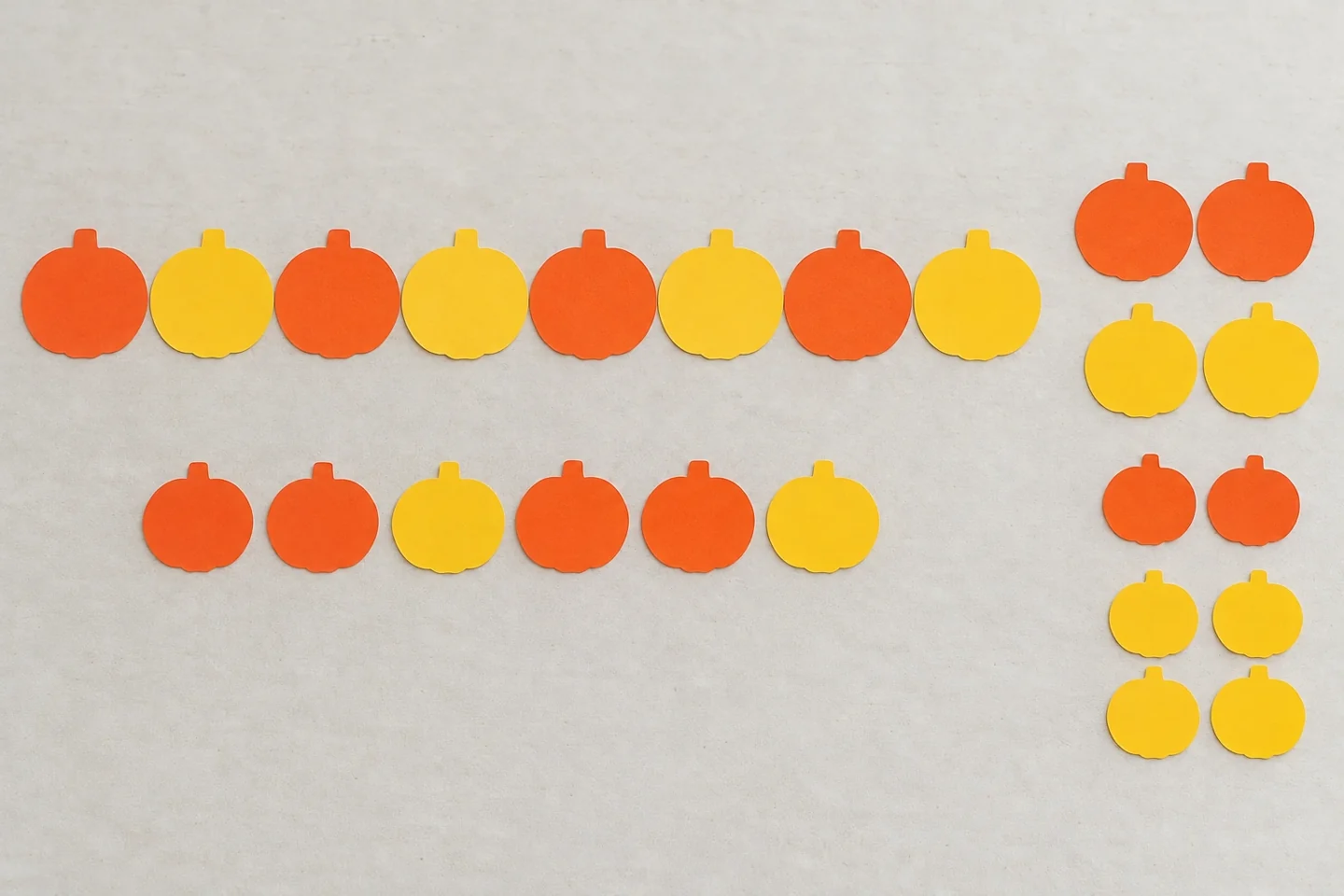
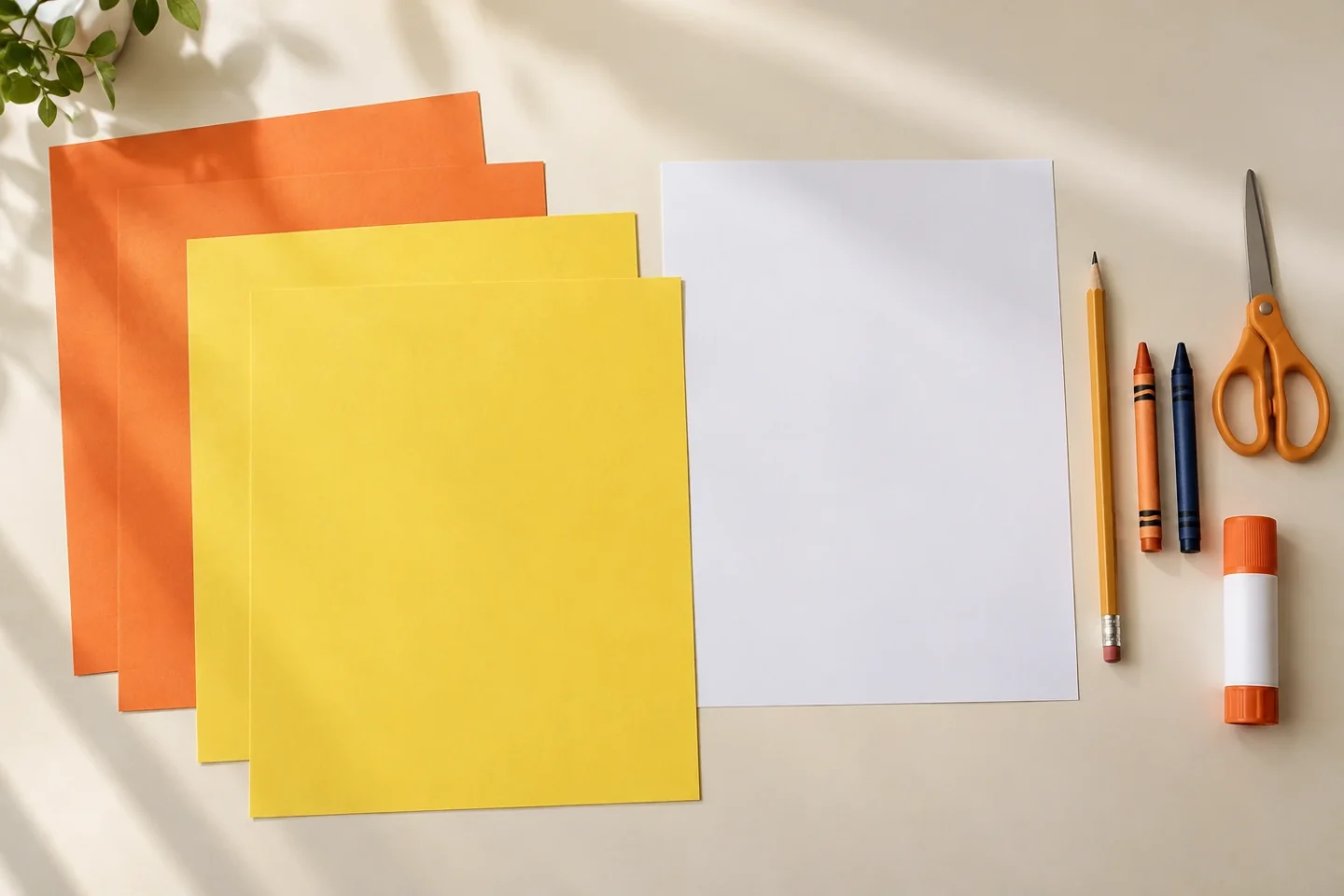
- Twenty-four paper pumpkin cutouts: six large orange, six small orange, six large yellow, six small yellow
- Two orange and two yellow sheets or ready-cut equivalent
- Adult or child scissors for preparing shapes
- One backing sheet
- Pencil and crayons
- Optional glue stick
A little project with plenty to discover
A pumpkin pattern is a little rule you can see. Start with two alternating colors, then invite children to invent a sequence and explain what belongs next.
Cut two colors in each of two sizes so you can change one feature at a time. Matching-size orange and yellow pieces are the clearest starting set. Large pumpkins can be about 8 cm wide and small ones about 5 cm; exact measurement is less important than a difference children can see. Begin with just eight matching-size pieces on a plain background. Keep the remaining shapes in a tray until the first repeating rule feels familiar.
Get the setup right
Point to the smallest repeating group while saying it aloud: orange, yellow. Slide your finger under the next orange-yellow pair and say it again. Build at least two full repeats before asking for a continuation; a single pair does not reveal the rule as clearly. When moving to orange-orange-yellow, group those three pieces loosely before extending the row. If a child suggests a different rule, ask them to show two repeats and then follow their version.
Prepare 24 cutouts in total: six large orange, six small orange, six large yellow, and six small yellow pumpkins. That leaves twelve of each color and twelve of each size. Cut the pieces before the game or ask an adult to help with the scissors. For the first color pattern, use just the twelve large pieces. For a size-only pattern, switch to the twelve orange pieces. Sorting the supplies into these sets first lets children notice the feature you are changing without accidentally making color and size rules compete.
Make it step by step
- Prepare six large orange, six small orange, six large yellow, and six small yellow pumpkins: 24 pieces altogether. Sort by color and size before beginning.
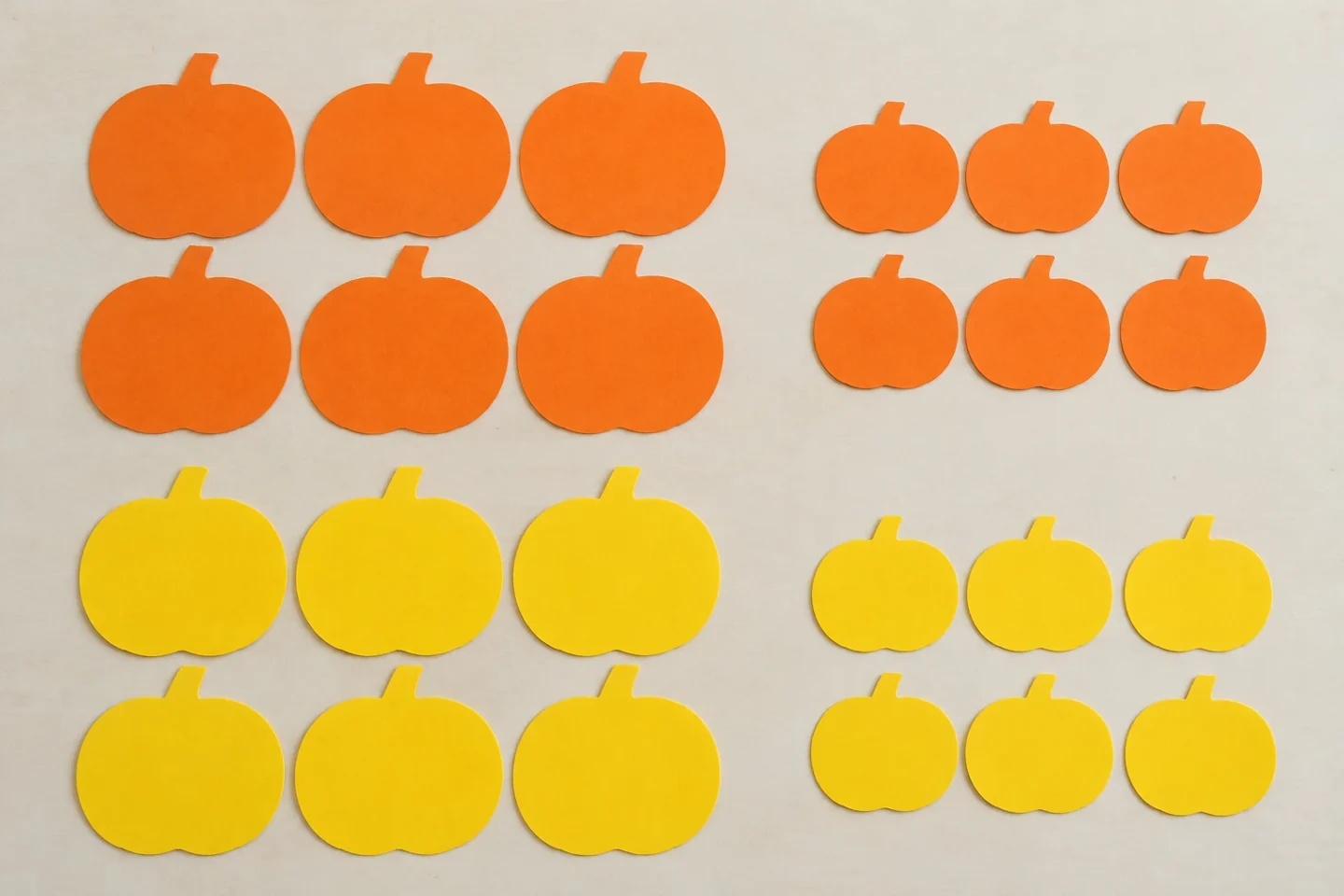
Sort the pieces first so you can change color or size one feature at a time. - Make orange-yellow-orange-yellow in a row. Say the repeating unit aloud, then ask your child to add the next two pumpkins.
- Try orange-orange-yellow repeated twice. Leave one space empty in the next repeat and ask which piece would complete it.
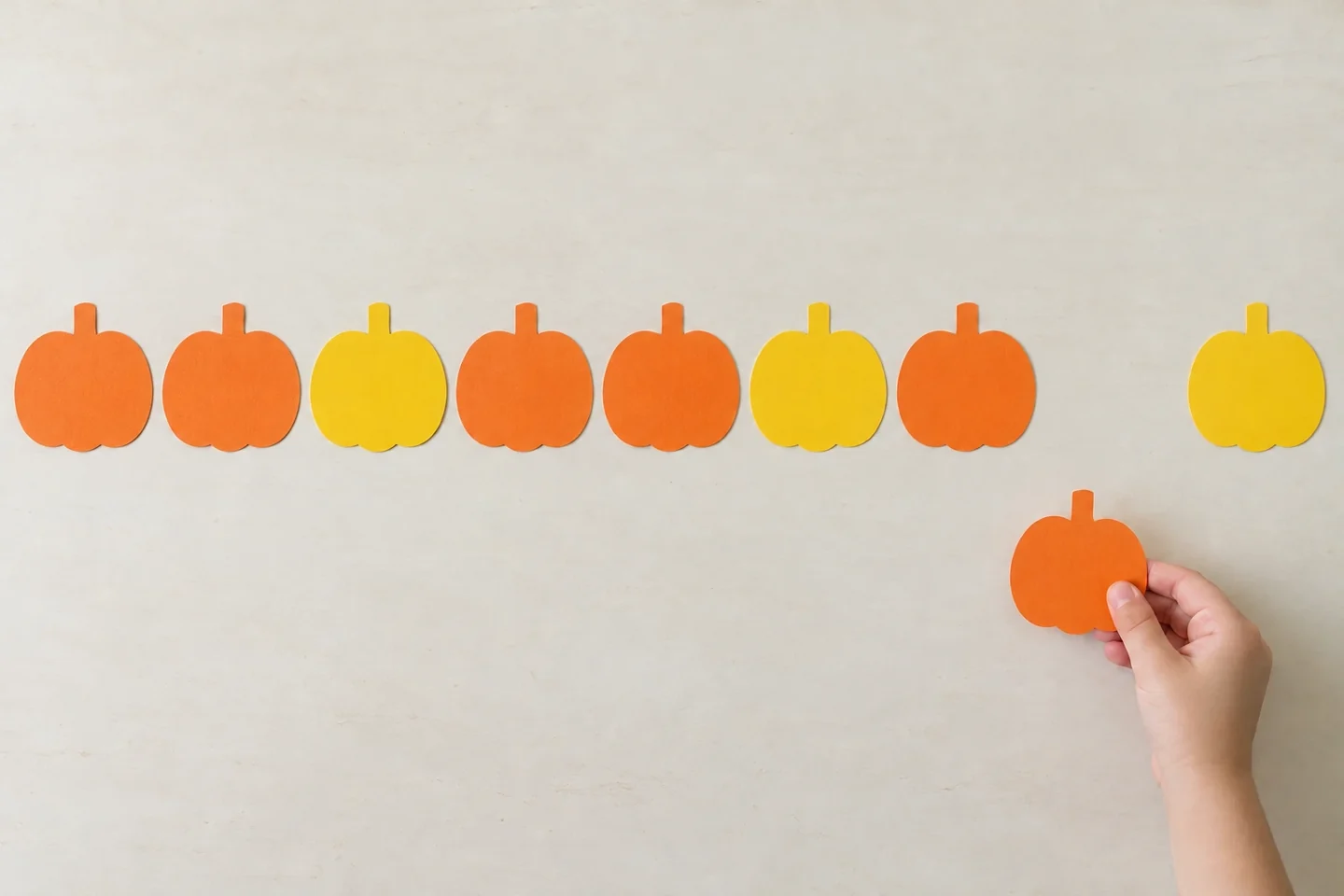
Look back at the earlier groups to work out which color belongs in the gap. - Change the rule to size: large-small-small. Keep color constant at first so children can focus on the new feature.
- Invite a child to make a secret rule for you to continue. Rearrange pieces freely, or glue one favorite sequence onto paper.
Make it work at home or in your classroom
For younger children, offer a choice of two possible next pieces instead of a large mixed pile. They may recognize what comes next before they can describe the rule. Older children can use color and size together, but introduce that combination after each feature has been explored separately. A classroom pair can take turns making and continuing a pattern, then reverse roles. Let children repair a sequence by moving the paper shapes rather than crossing out an answer on a worksheet.
Talk, notice, and learn together
What is the smallest part that repeats? Could the same rule use claps instead of pumpkins?
Connect the visible pattern to another action. An orange-yellow row might become clap-tap-clap-tap; an orange-orange-yellow row might become clap-clap-tap. Ask whether the paper colors and sounds share a repeating structure even though they look and feel different. Try covering one pumpkin in the middle with a blank card and work out what must be underneath. Children can explain by pointing to neighboring repeats, which is often easier than using formal pattern names.
Helpful fixes
The rule changes halfway: ask where the pattern starts repeating, then rebuild that small unit. Too many choices: offer only two matching-size colors.
Build a pattern train
Make a pattern train with a starting card showing just the repeat unit. A child places orange-yellow on the card, then builds three more orange-yellow pairs along the table. Remove the starting card and ask whether the rule is still visible in the longer row. Next, show orange-orange-yellow and compare how many pieces are needed for three repeats. Older children can count the total pumpkins before building, then check the prediction afterward. This extension separates the number of repeated groups from the number of pieces in each group. Keep the discussion concrete, pointing to the actual pumpkins rather than introducing formulas too early.
Finish display and clean up
Finish with a child-made challenge rather than another adult example. Ask the maker to leave one gap, then let a partner choose the missing piece. If the partner disagrees, return to the beginning and trace the repeats together. Keep unglued pieces in separate envelopes by size so they are ready for another game. Glue a single favorite row onto paper only if the child wants a permanent picture; preserving the reusable set leaves many more possibilities for play.